

It ain't over until it is over
The software selloff after ServiceNow and IBM has a fundamental reason. And that reason is exactly what makes this the defining test of the bottom thesis in Agentic Winners.

I. The actual reason for the selloff
The official explanation — delayed Middle East deals, Armis integration, cautious guidance — is the management narrative. The real reason is more fundamental: the question of genuine investment.
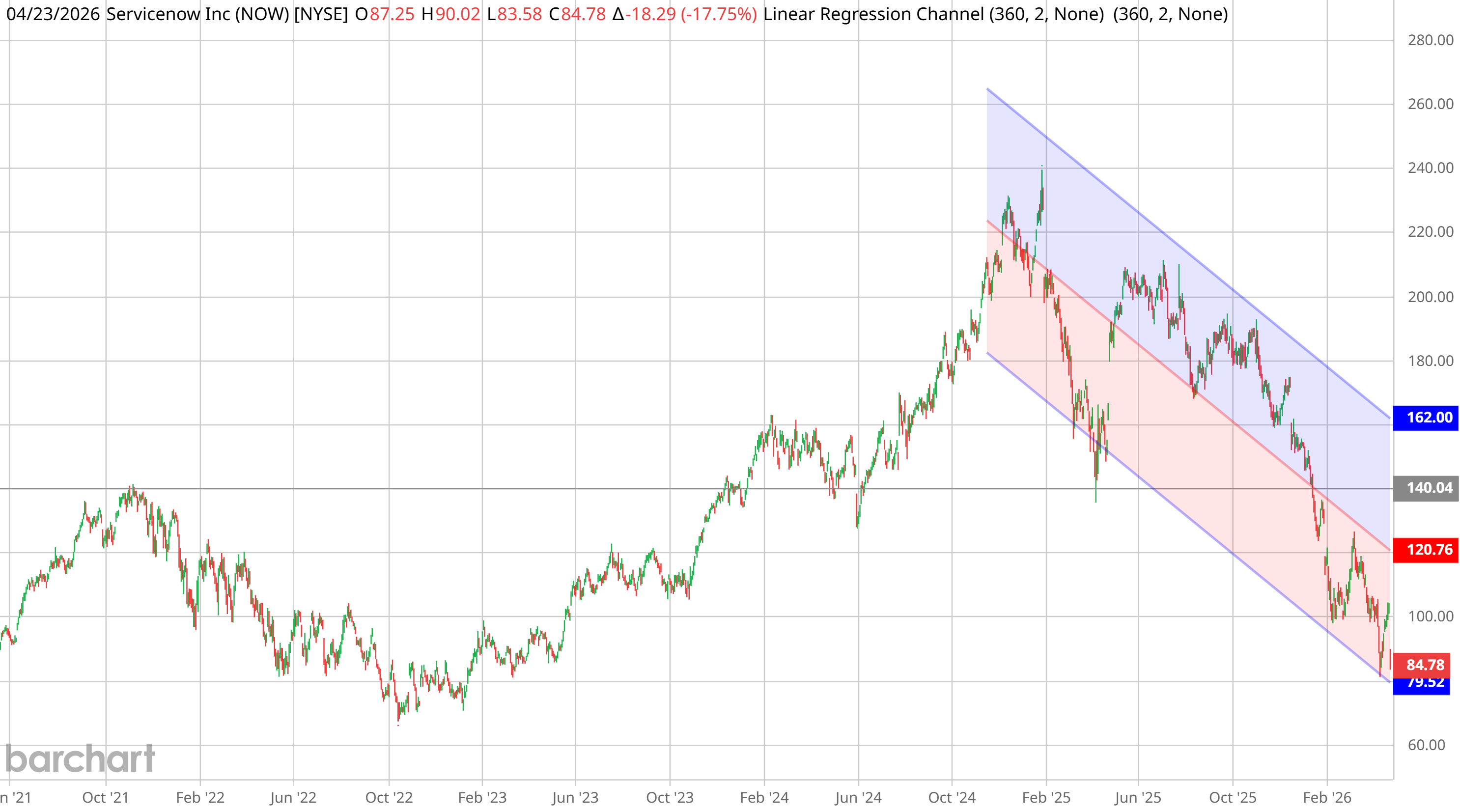
ServiceNow on April 22: Revenue beat ($3.77B vs. $3.75B consensus), cRPO +25% YoY, Now Assist ACV target raised from $1.0B to $1.5B. Result: −17.75% on the trading day, from $103.07 to $84.79. Market cap from $107B to $87.8B. Roughly $20 billion evaporated in a single session — on a beat.
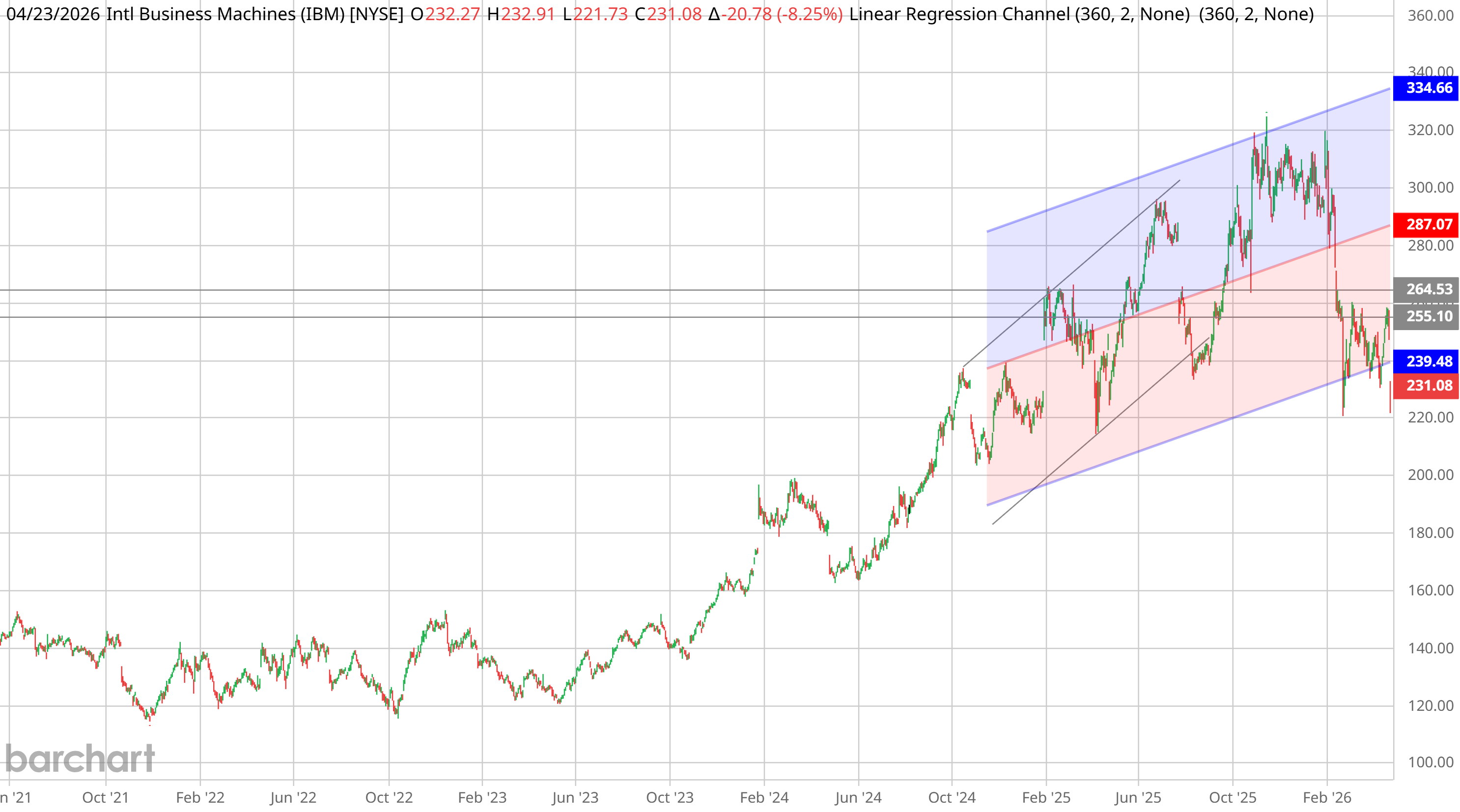
IBM on the same day: Revenue beat, Adj. EPS beat, software guide raised to >10% CC. Result: −6%.
Two beat-and-lose prints on the same day. That is not a coincidence, and it is not the Middle East. The market is recalculating a structural equation:
Legacy deceleration + insufficient AI uplift + hybrid-instead-of-outcome pricing = premium multiple no longer defensible.
This equation deserves the real work, term by term.
II. The bridge math that does not add up
Layer 1 — Legacy Decay is real
• Subscription growth 19% CC in Q1, down from historical 20%+
• cRPO Q2 guide of 19.5% CC — 150bp sequential deceleration versus 21% in Q1
• Renewal rate from 98% to 97%
• 150bp headwind from mix shift toward hosted hyperscaler offerings (already quantified in Q4 2025)
• ServiceNow’s own case studies tell the story: Robinhood deflects 70% of employee requests before any human intervention. A British engineering company with 45k employees reports 38,000 tickets deflected, resolution time down by two full days.
In the ServiceNow pricing model, every deflected ticket means one fewer fulfiller seat at the next renewal. The company celebrates the deflection numbers on the earnings call — and each of those numbers is simultaneously the evidence of seat erosion the bears are pricing in.
Layer 2 — AI uplift is real, but too small
• Now Assist ACV target for 2026 raised from $1.0B to $1.5B
• $1M+ Now Assist customers +130% YoY
• Net new logo ACV +50% YoY, including the largest single deal in company history at $15M
• AI Control Tower: average deal sizes more than doubled QoQ
• Raptor DB Pro: deal volume +80% YoY, five deals over $1M
But: $1.5B AI ACV on $15.7B FY subscription = 9.5% AI mix. Even if Now Assist delivers 50% ahead of plan (to ~$2.25B), that is 14% mix. The core accounts for 85–90% of revenue and is decelerating by 100–150bp per year.
The bridge math: +$500M AI uplift against ~$150–200M core deceleration. Net positive. But not positive enough to justify a forward P/E of 50x+.
Layer 3 — The market wants an outcome, ServiceNow delivers a hybrid
• Salesforce Agentforce: $2 per conversation — pure outcome pricing
• Workday: moving toward share-of-value capture on agent output
• ServiceNow: Foundation/Advanced/Prime with token pools — hybrid with consumption overlay
• CPO Amit Zavery expressed explicit skepticism about pure outcome pricing on the Q1 call
Why this matters for valuation: Pure outcome scales non-linearly with AI proliferation in the customer context. If an agent delivers $10M in business value and the vendor captures 5%, that is $500k in ARR from a workflow that previously generated two seats at $20k each — a 12x increase. Hybrid consumption scales linearly with token consumption: 1–2x per workflow, not 10x. The valuation multiple implied by these two models is dramatically different.
The synthesis: The market is not pricing that ServiceNow is broken. The market is pricing the equation as not matching a premium multiple. Slowly eroding core + AI uplift that does not fully compensate + a monetization model that caps the valuation upshot.
III. Where the multiple compression stands today
This is where it gets interesting. The compression has already played out in large part:
• Forward P/E: 20.37x — below the S&P 500 (~21x)
• EV/Revenue 2026E: 5.3x — below the SaaS median (6.1x)
• Drawdown from peak: −59.9% (from $211.48 to $84.79)
• Peak forward P/E ~80x → today 20.4x = −75% multiple compression
• Peak EV/Revenue ~13x → today 5.3x = −60% multiple compression
ServiceNow has already absorbed the full magnitude of the 2022–2023 SaaS bust (which compressed medians by around 60%). The category leader's premium over the sector median is fully eliminated. The market is pricing ServiceNow not as a premium name but as an average SaaS, for the first time in the company’s post-IPO history.
Analyst target cuts have happened. Stifel $135, Goldman $163, Jefferies $135, Piper Sandler $140, Raymond James $130, Evercore holding $175. Mean target post-cut at ~$148. At $85 current, that is +74% to the mean target. Even the harshest target (Raymond James $130) implies +53% upside.
IV. The only test that matters now
Now the loop closes. The fundamental equation explains the selloff; the multiple compression is 85–90% done. What remains open: does the market accept the net-positive bridge math — or does it continue pricing in pure outcome disruption?
This is a binary test with two technical anchors:
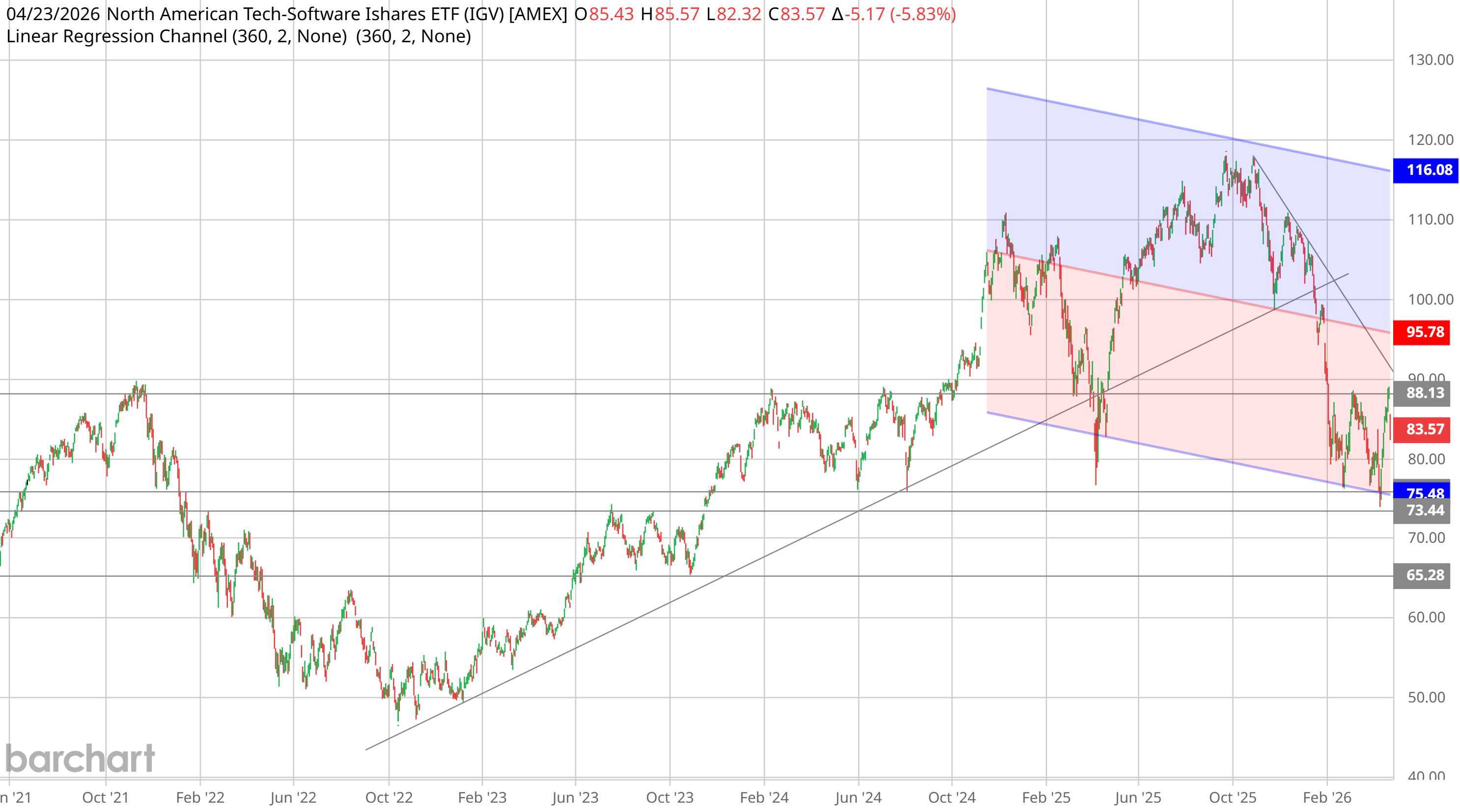
Scenario A — the hold: NOW $81.24 / IGV $74.62 hold on a daily close basis. Implication: the market accepts that core deceleration is net compensated by AI uplift. Capitulation is done, the bottom is in. The entry level for AW25 Agentic Winners is established. The risk-reward structure becomes asymmetric to the upside: 10–15% downside vs. 50–75% upside to the analyst mean. A 1:5 ratio.
Scenario B — the breakdown: New lows. The market concludes that hybrid pricing is structurally inferior and that AI uplift is not enough. Pain continues. The cycle runs to the absolute floor at 3–4x EV/Revenue, which for ServiceNow would be ~$60–65. Another 25–30% leg down.
This is not a technical chart level. This is the price point at which the fundamental thesis crosses with the disruption thesis.
V. The three layers of relative strength observation
The next 5–10 trading days contain more information than an entire quarter in normal market conditions. Three layers matter:
Layer 1 — Who holds in the decline? Future leaders lose less than their peer group. The signal is the differential, not the absolute performance.
Layer 2 — Who turns first? The first two or three names to recoup their losses within 48–72 hours are the leaders of the next cycle. Classic AW25 upgrade candidates.
Layer 3 — What does not repeat? The catalyst calendar is dense: Microsoft on April 29, ServiceNow Analyst Day on May 4, Knowledge 2026 from May 5–7, Workday on May 27, Salesforce on May 28. If the weakest names stop participating in the next negative impulse, the bottom is in.
VI. Generation Rotation: the software layer as next phase
In the Closelook Rotation Framework, each Nvidia generation cycles through Dawn → Early Ramp → Mid-Ramp → Sunset. April 2026 sits in Rubin Early Ramp — Memory +61% YTD, Packaging +43%. The infrastructure layer has been discovered and bought.
The next rotation is the orchestration layer on top of the infrastructure layer: enterprise software that operationally integrates AI agents. If $81.24 / $74.62 hold, this is the Rubin Dawn phase for the software layer — not hardware, but workflow. And it starts from valuations below the broader market, with bridge math that does not explode but does carry.
VII. What invalidates the thesis
No position without a defined exit. The bottom thesis is dead if:
• NOW < $81.24 or IGV < $74.62 on a daily close basis — technical bottom break
• Peer cRPO deceleration at WDAY (May 27) or CRM (May 28) below 15% CC — a sector-wide fundamental problem, not idiosyncratic
• Now Assist ACV walk-back at the ServiceNow Analyst Day on May 4 — the AI bridge math collapses in that moment
• Microsoft Azure AI revenue growth on April 29 below 30% — enterprise AI adoption slower overall than modeled
Each of these triggers forces an exit. All four together are unlikely enough that the opposite thesis holds the higher base rate — conditional on $81 / $74.62 holding.
VIII. Closelook Watch List — AW25 Nexus / Rubin Dawn
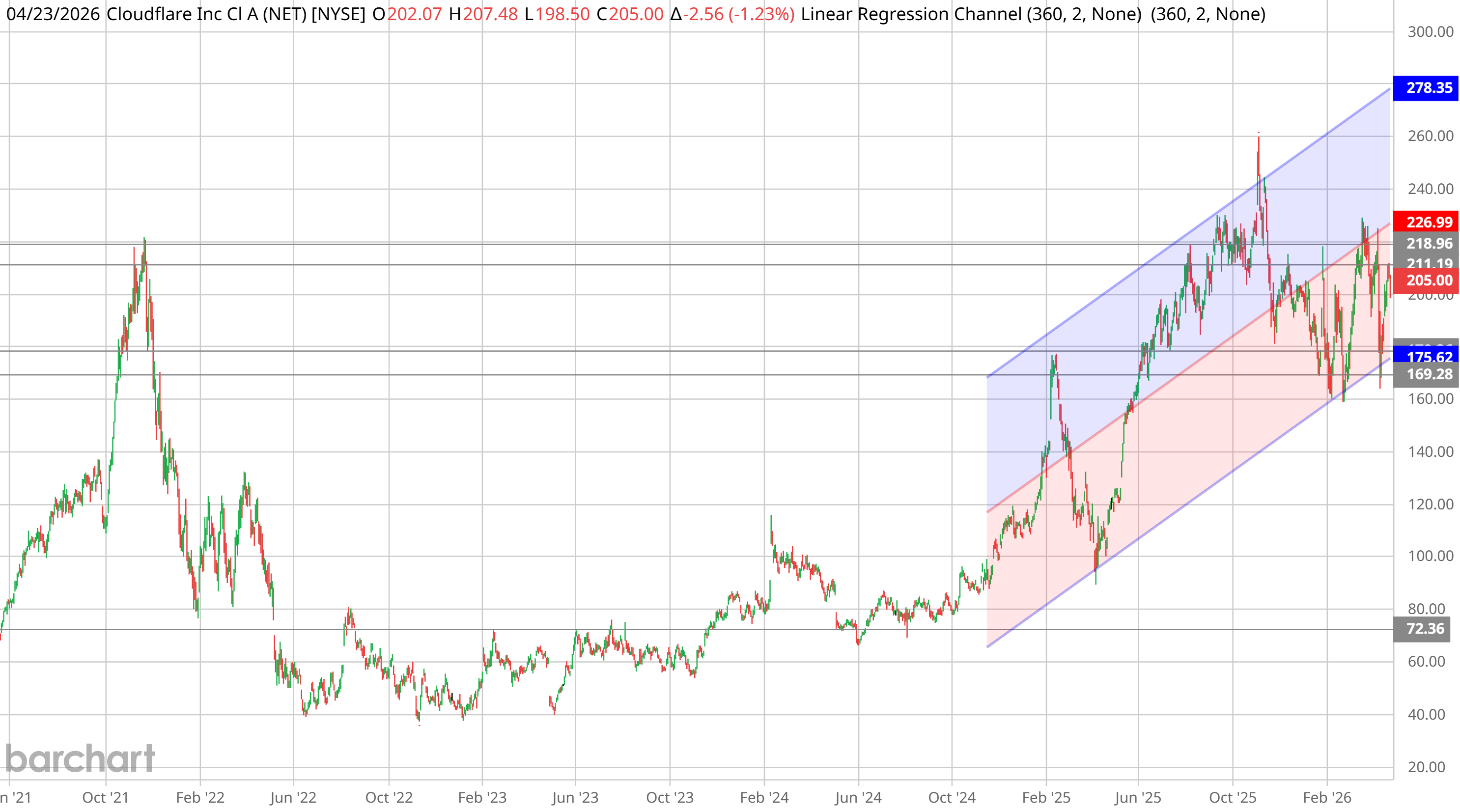
Primary orchestration layer (AW25 Core): NOW · PLTR · CRM · WDAY · MSFT · ORCL
Secondary (Platform / Security Nexus): PANW · CRWD · DDOG · SNOW
Rubin Dawn infrastructure flank (cross-read): MU · AVGO · TSM · ASML
What to watch: which names close on April 24 and 25 above their Wednesday lows? Which hold even on a further down day in the indices? The list still standing after these two sessions is the watch universe for the next AW25 recalibration.
IX. Closing
The asymmetry is the core of this setup. The multiple compression is quantifiably 85–90% complete. The fundamental equation — legacy decay against AI uplift — is uncomfortable but nets positive. Over the next five trading days, the market is not deciding the direction of individual stocks. It is about deciding whether hybrid consumption models survive or whether pure outcomes become the only accepted monetization path in the AI era.
If $81.24 / $74.62 hold, the bottom is in, and Agentic Winners have their entry level. If not, the cycle runs to the absolute floor at 3–4x EV/Revenue.
Yogi Berra coined the formulation in a different arena, but the logic is identical. It ain’t over till it’s over. For the SaaSpocalypse thesis, the same applies — in reverse. The bottom is not confirmed until the retest has held. And that retest is running now.