

Temperature 59 — first crack in semis, defensives bid
Investment Diary: Trimming into strength

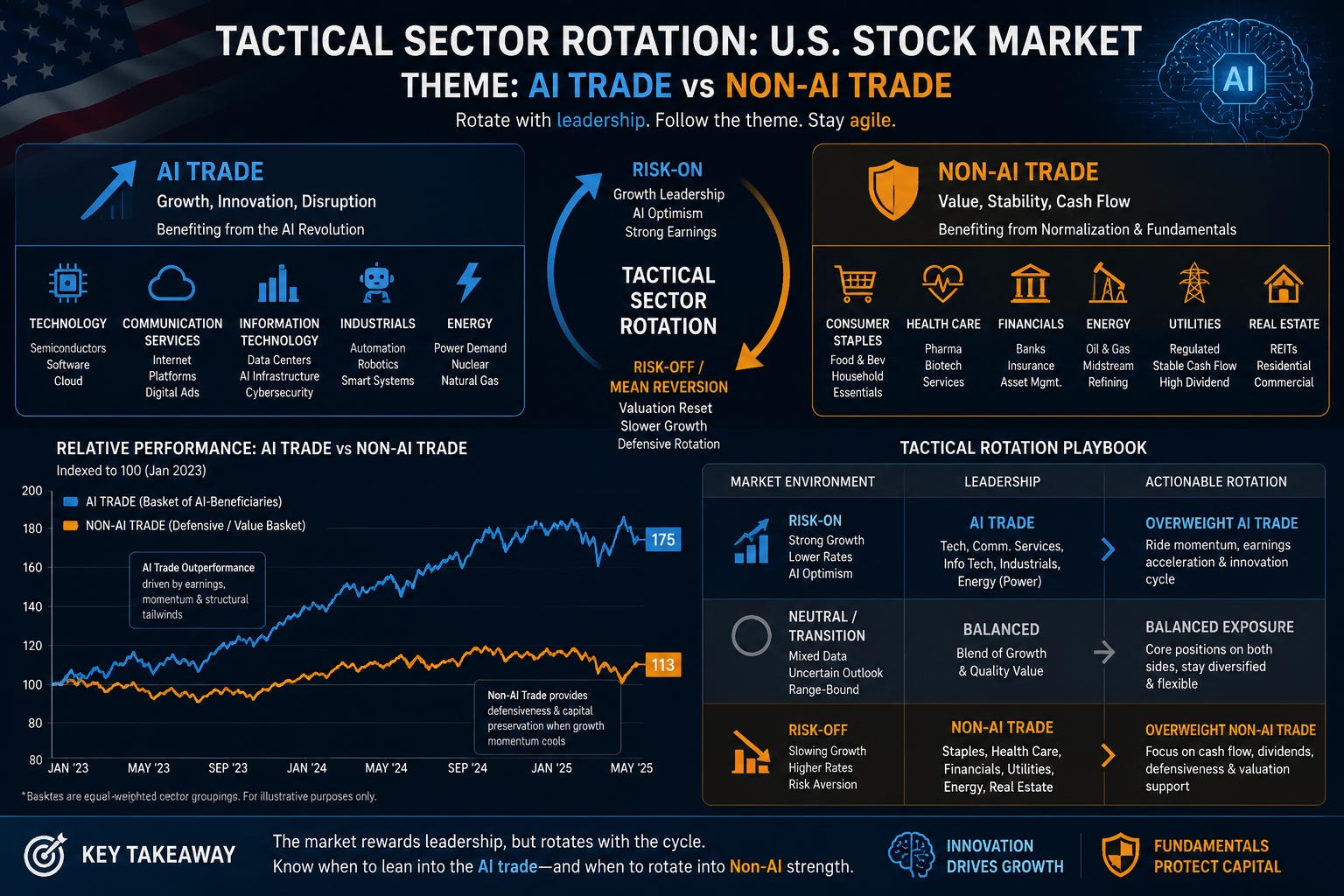
The Closelook Temperature sits at 59 🟡, still risk-on, but Tuesday’s session put a fresh divergence on the tape. The Rubin Build-Out 100 shed 2.95% on the day after a 27.3% trailing-month surge — the kind of single-session reversal that typically marks a digestion phase rather than a trend break, but worth watching. The Euro-AI 50 followed Rubin lower, with a 2.39% daily decline, and is now negative for the week at −2.31%, suggesting European semi and AI names are meeting resistance after their own month-long recovery. HALO 100, with its larger defensive and healthcare weight, held up at −0.89% — exactly the basket composition that should outperform if rotation is underway.
The sector tape from Tuesday confirms the rotation read. Defensives bid hard: XLV +1.96%, XLP +1.28%, XLF +0.78%. Cyclicals and tech rolled: XLK −1.51%, XLY −0.90%, XLI −0.39%. SPY closed −0.15%, masking a wide cross-sectional spread of roughly 350bps between healthcare and tech in a single session.
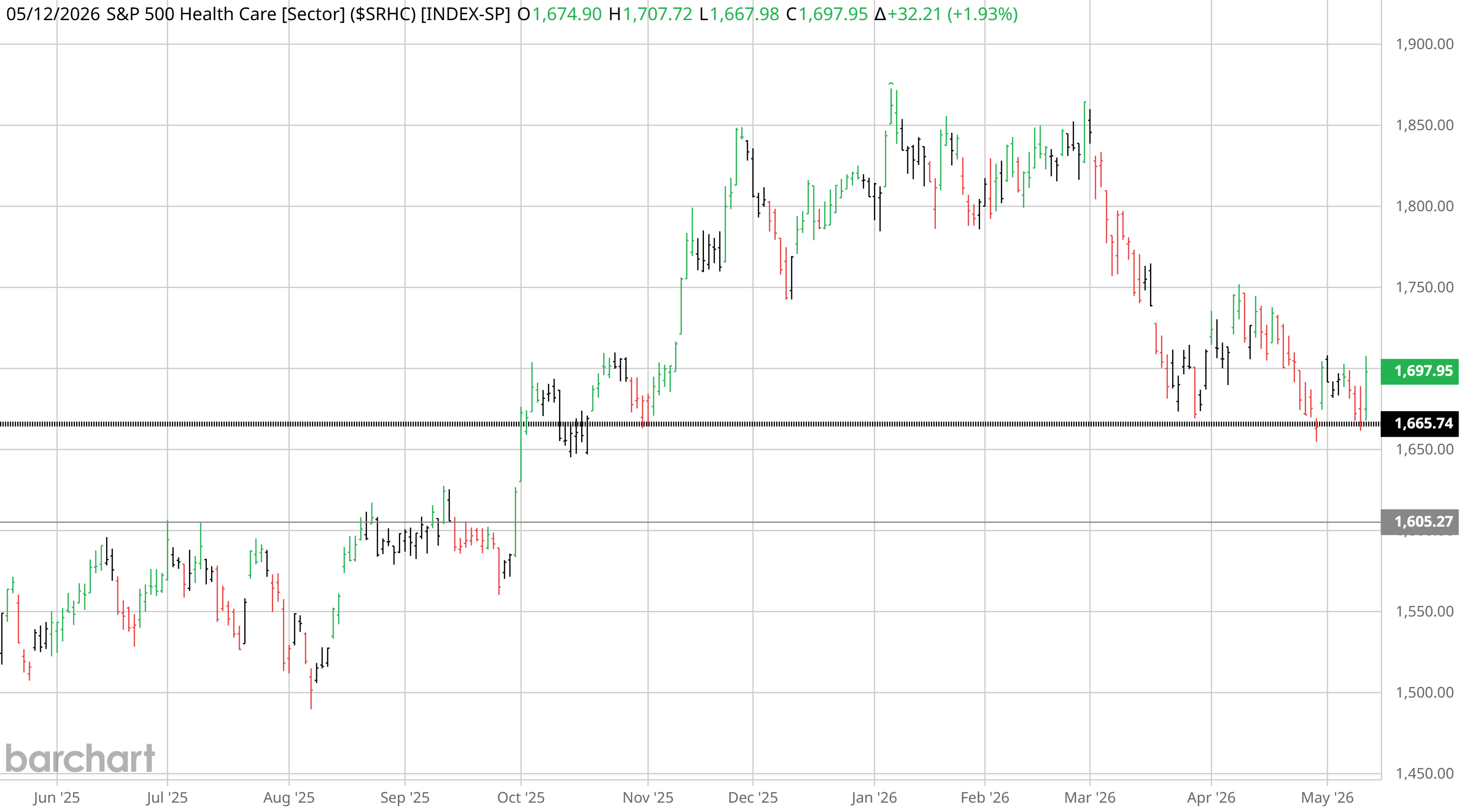
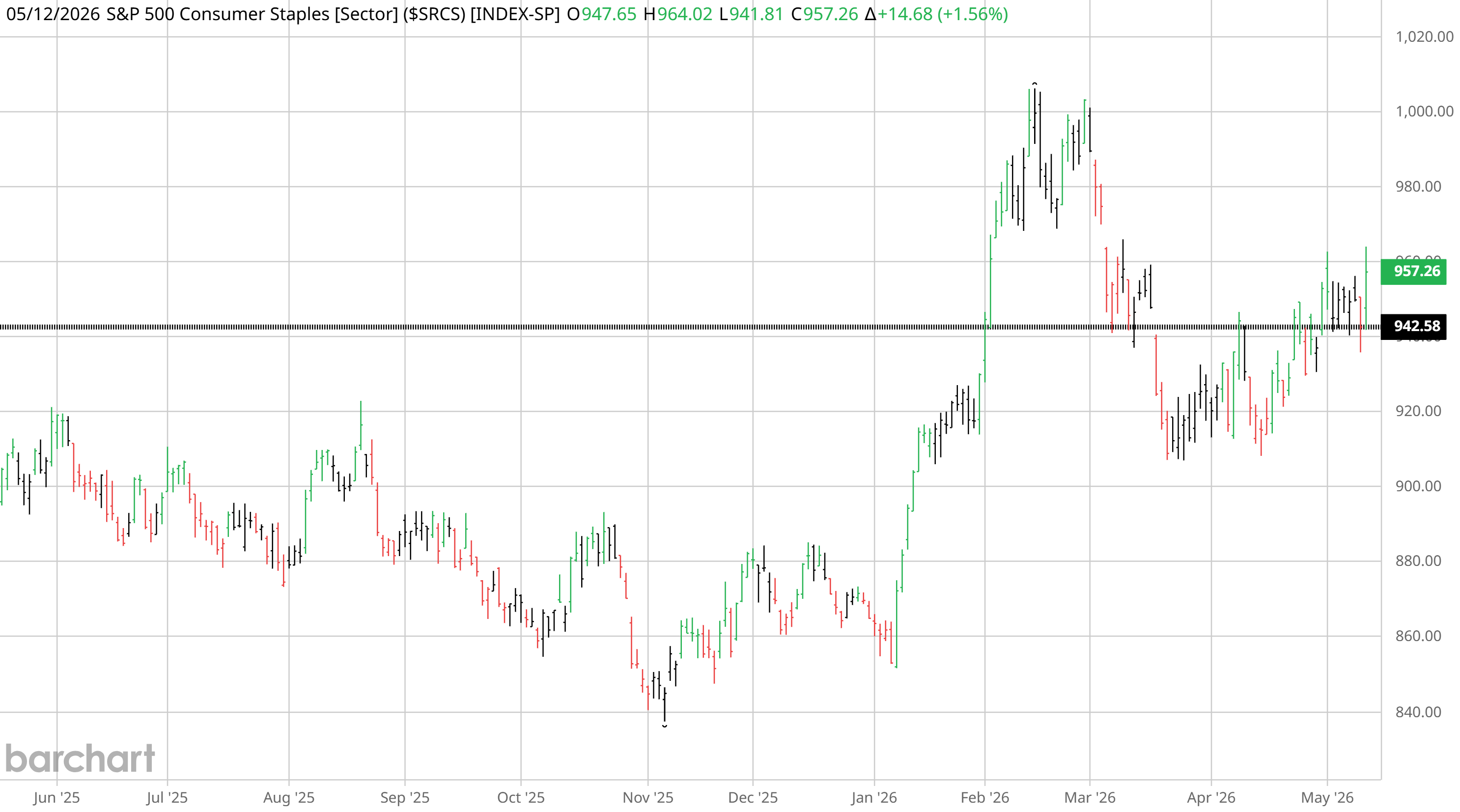
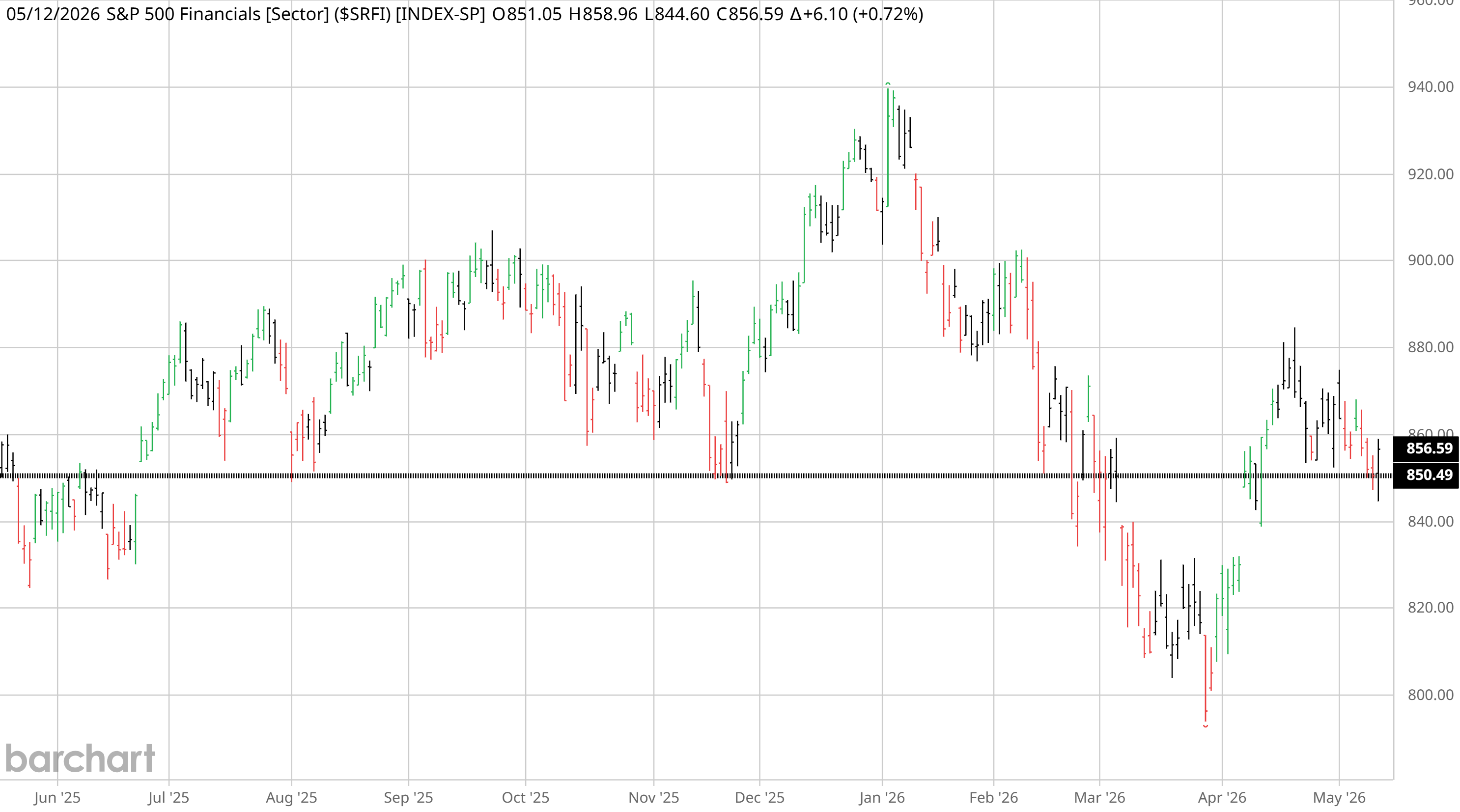
Inside semi,s the damage was sharper than the cap-weighted ETFs suggest — SOXX −3.15%, SMH −2.61%, AVGO −2.13%, MRVL −3.71%, with SOXL (3× bull) down 9.4%. NVDA itself held green at +0.61%, the only major semi up on the day. Single-name confirmations of the rotation: Netflix +2.59% and Sprouts Farmers Market +6.51% — both non-AI, non-tech.
The Pattern Scanner registered 28 active signals, top five clustered in support-confluence setups: NOC at 41 confidence and MCD at 37, both in red regimes, alongside PFE and JNJ in yellow. NOW is the only growth name in the cluster in the green regime, with 34 confidence. The scanner is finding technical floors in defensive names — pharma, defense, staples — not in names riding momentum. That pattern reads up cleanly with what the sector ETFs printed yesterday.
Cointegration shows zero active pairs against seven recent breaks — a structurally elevated break count without new pair formation. When pair relationships dissolve in bunches like this, cross-asset correlations are shifting. That fits the rotation hypothesis: capital rebalancing across sectors rather than settling into a clean trending environment.
Forward focus: whether Rubin can hold the week’s +4.95% gain through Friday, whether Euro-AI’s week-to-date weakness deepens or finds a floor, and whether the defensive bid in pharma/staples/financials extends into a second session — a one-day move is rotation noise, a two-day follow-through is rotation signal.
Editor’s note · Thomas
Tactical trim into any strength that comes back to the winners since late March — semis especially. Yesterday’s session was the first real crack: SOXX −3.15%, SMH −2.61%, AVGO −2.13%, MRVL −3.71% on the day. The Rubin sub-sectors that have run +50% to +200% YTD will eventually mean-revert; you don’t have to time the top, you just have to not be the last one out. The diary is sizing down infrastructure-AI exposure into bounces from here, not chasing.
What is worth noting separately is the strength of the non-AI, non-tech complex yesterday: XLV +1.96%, XLP +1.28%, XLF +0.78%, with Netflix +2.59% and Sprouts Farmers Market +6.51% on the single-name side. That is the textbook signature of a rotation getting started — defensives bid, cyclical leaders sold, market index basically flat (SPY −0.15%) because the dispersion is internal. We have the sector ETFs in our Sector RS pattern — XLV is now near the top of the relative-strength table, XLK is rolling. Whether this extends past Wednesday is the question that decides whether this is noise or the start of a regime change.
The seven cointegration breaks against zero active pairs is the other structural signal that argues for tighter position sizing on spreads until new stable relationships reform.