(1) What's the buzz?
The Nasdaq Composite Index experienced a significant downturn on Thursday, mainly driven by disappointing earnings reports and guidance from several major tech companies.
Despite Microsoft (MSFT) and Meta Platforms (META) reporting better-than-expected top-line numbers, their earnings guidance fell short of investor expectations due to increased spending on artificial intelligence infrastructure. This led to a 2.86% decline in the Nasdaq Composite, with the index erasing its October gains.
The broader market also felt the impact, with the S&P 500 and Dow Jones Industrial Average dropping 1.86% and 0.9%, respectively.
Adding to the market's concerns, economic numbers presented a mixed bag. Core inflation, which excludes volatile food and energy prices, remained stubbornly high. As of September 2024, the annual core consumer price inflation rate in the United States increased to 3.3%, up from the three-year low of 3.2% recorded in the two previous months and ahead of market expectations.
This persistence in core inflation is significant because it reflects underlying price pressures, particularly in services such as housing and transportation, which saw sharp increases. For instance, costs for services less energy services rose by 4.7%, with notable increases in shelter (4.9%) and transportation services (8.5%)
(2) So what?
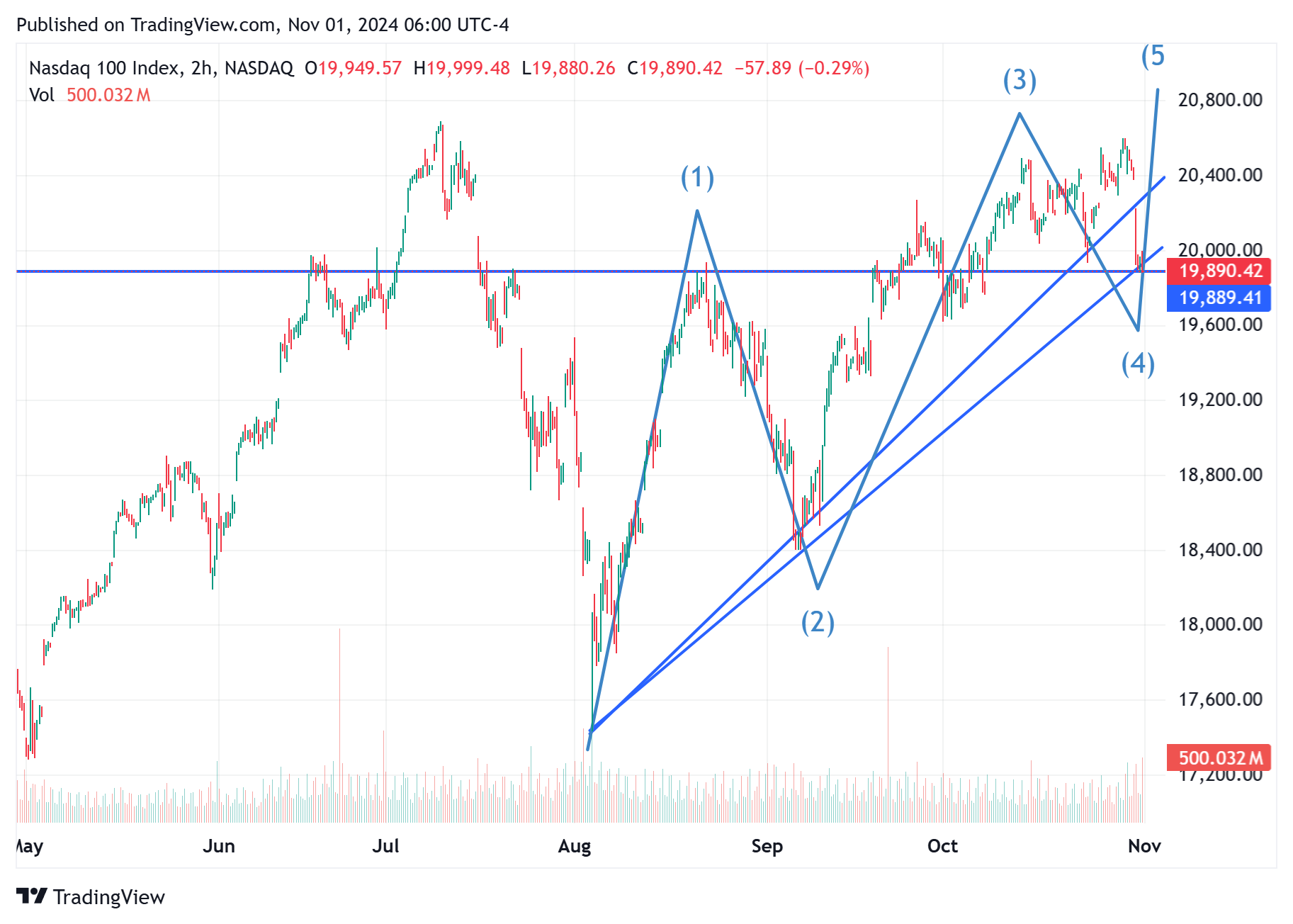
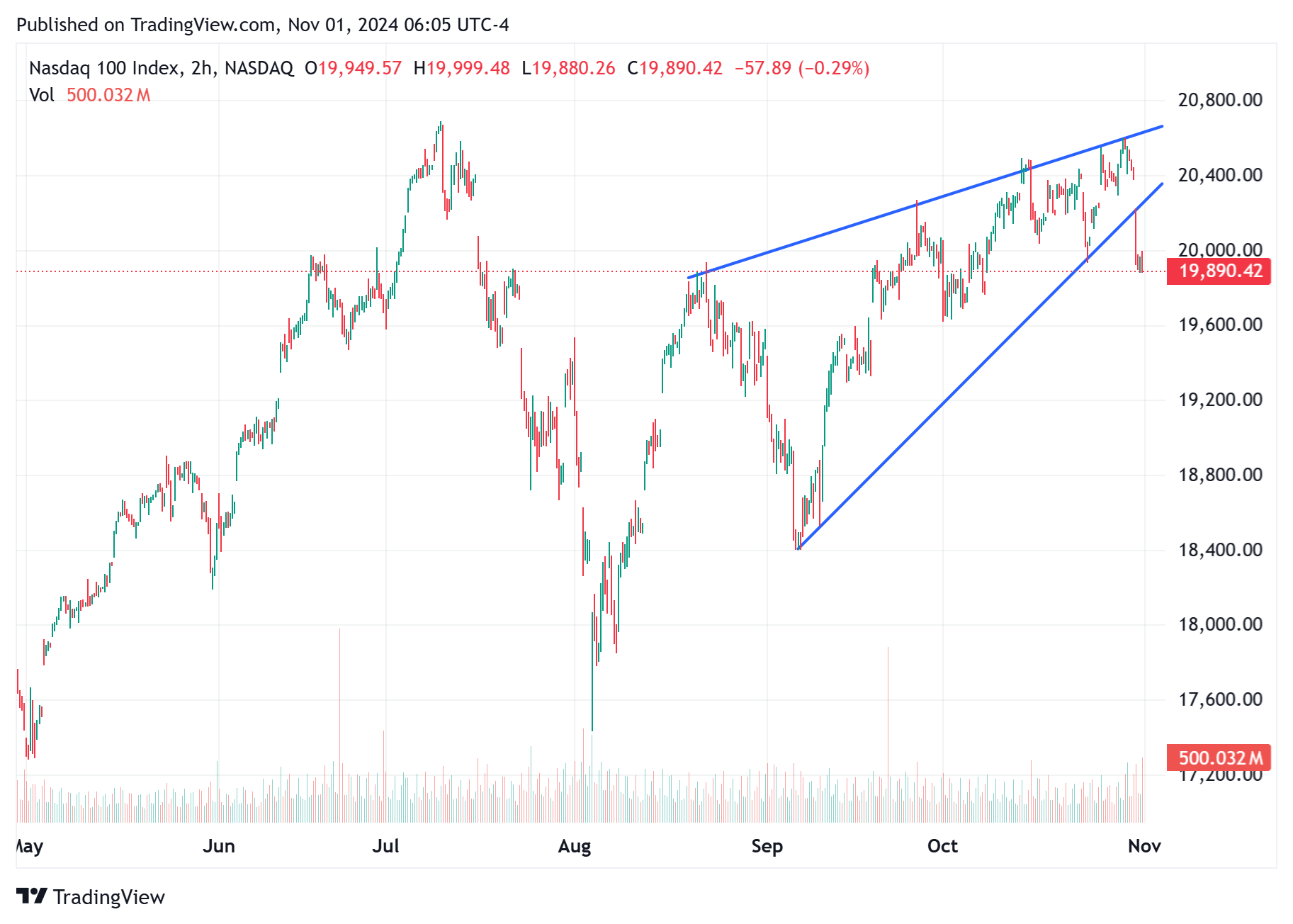
The Nasdaq 100 failed to reach an ATH and created. It found support at the lower trend channel in place since August 2024. A move below the late summer highs around 19900 on the index would terminate the short-term bull count.
The preferred Elliott wave count would then be the count depicted below. In this scenario, we have just completed a wave B and have started a powerful wave C decline. The internal structure of the recent advance does not look like exhibiting impulse wave characteristics.
A consolidation until election day around current levels and a further decline on the election news seems possible.
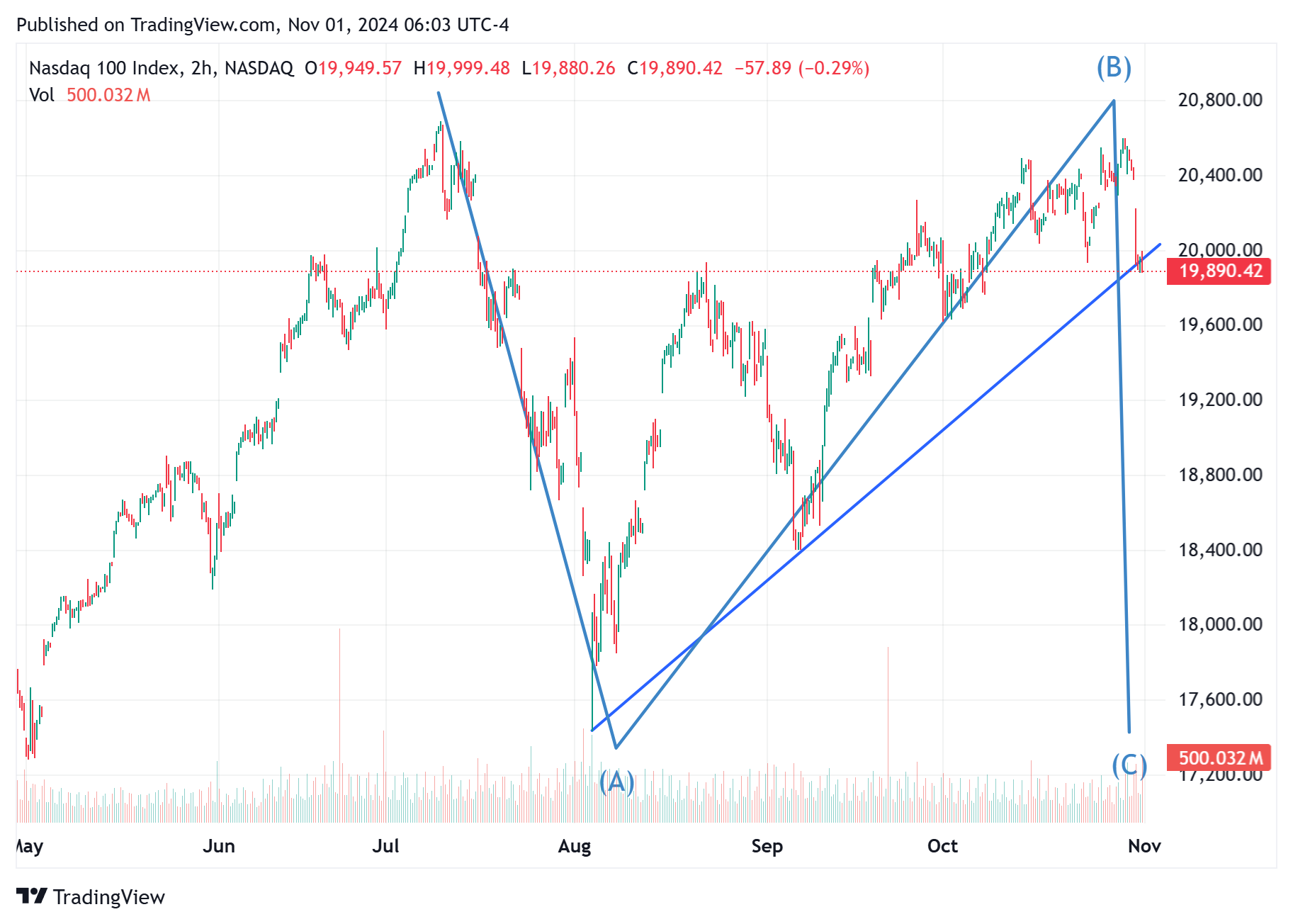
The wedgy type of price advances since late August/early September look a bit alarming, too.
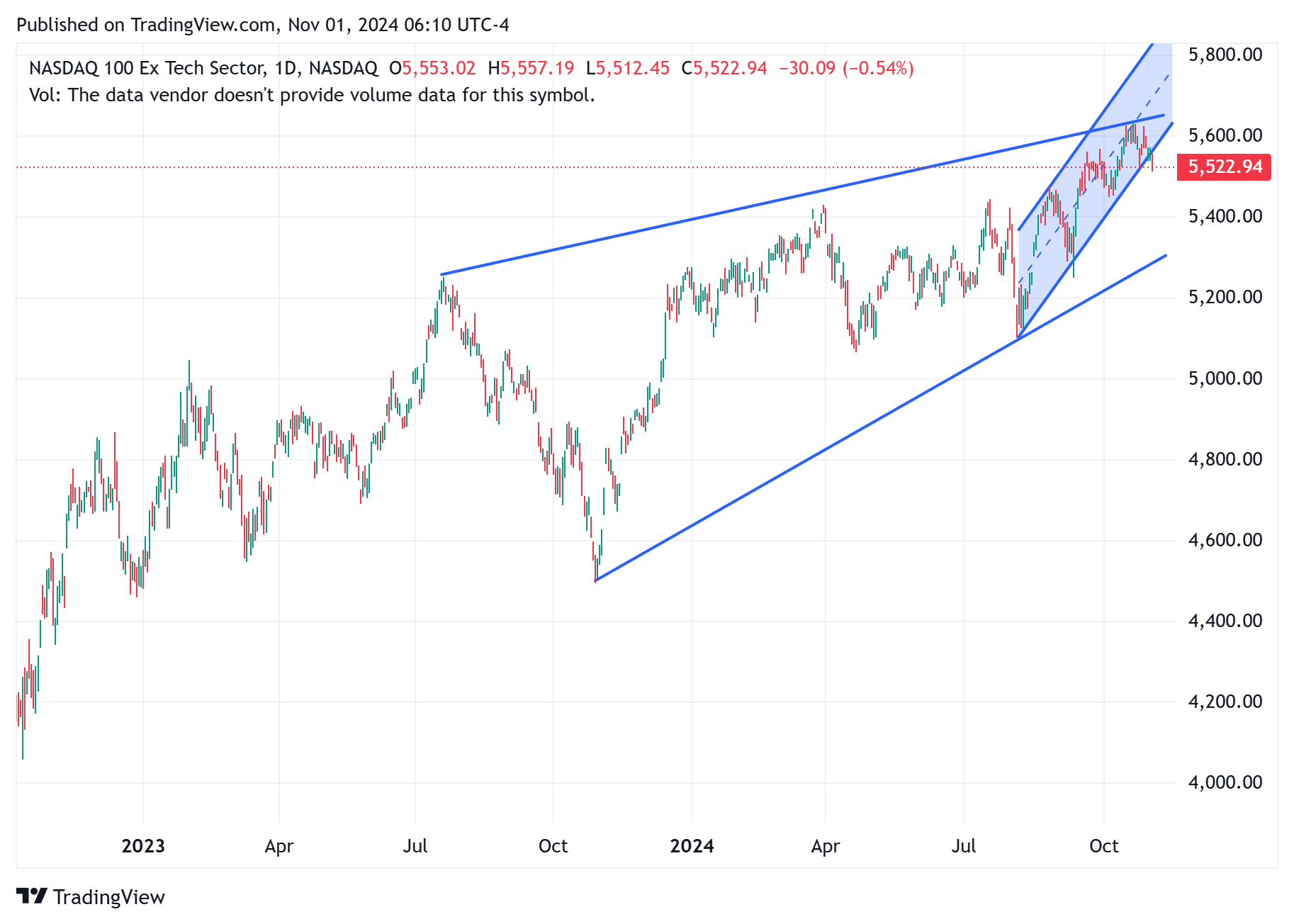
The Nasdaq 100 Ex Tech sector has led the advance and broken below its short-term trendline.
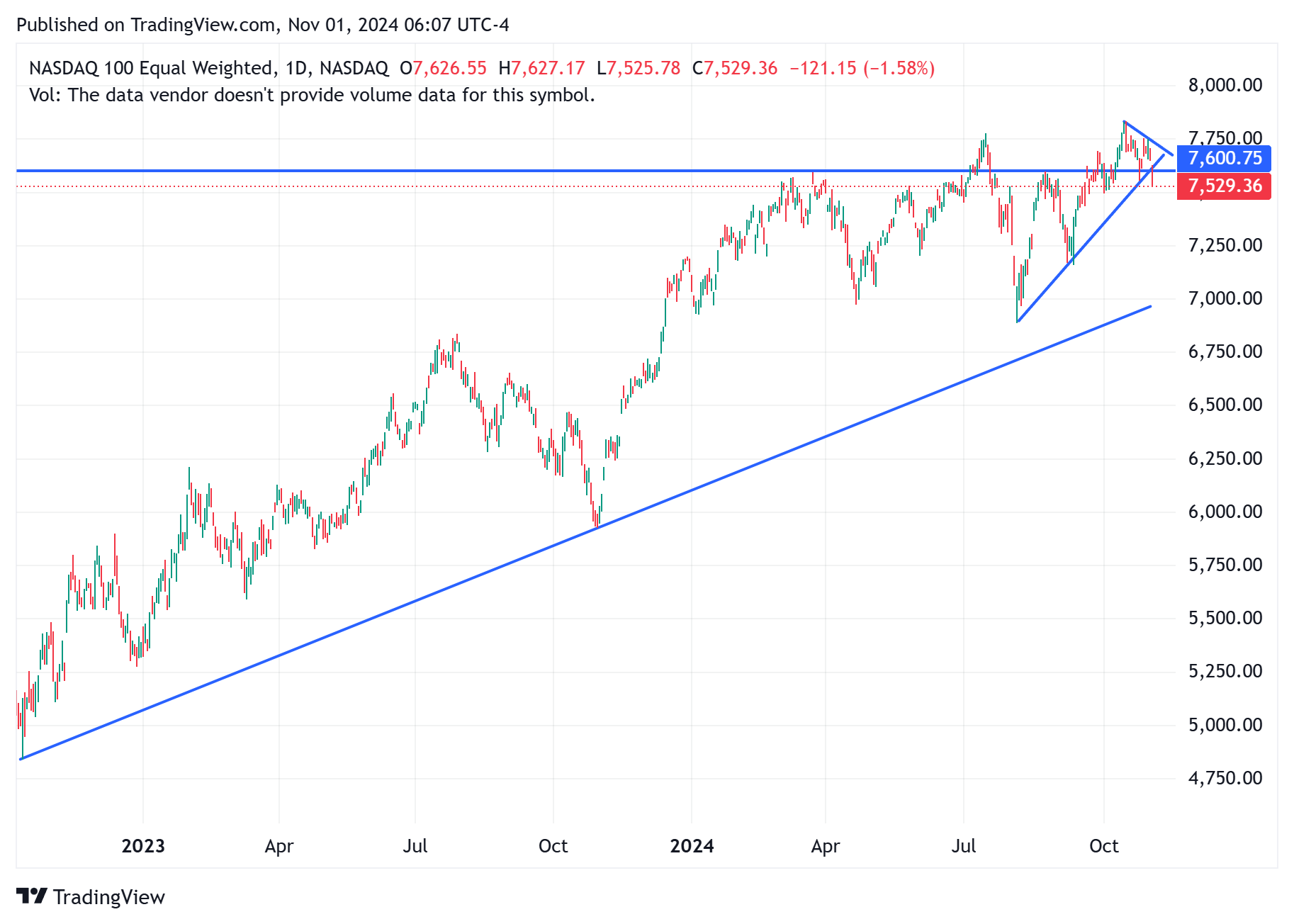
The Nasdaq 100 Equal Weight index shows a similar picture. It may find trend line support around the 7000 level.
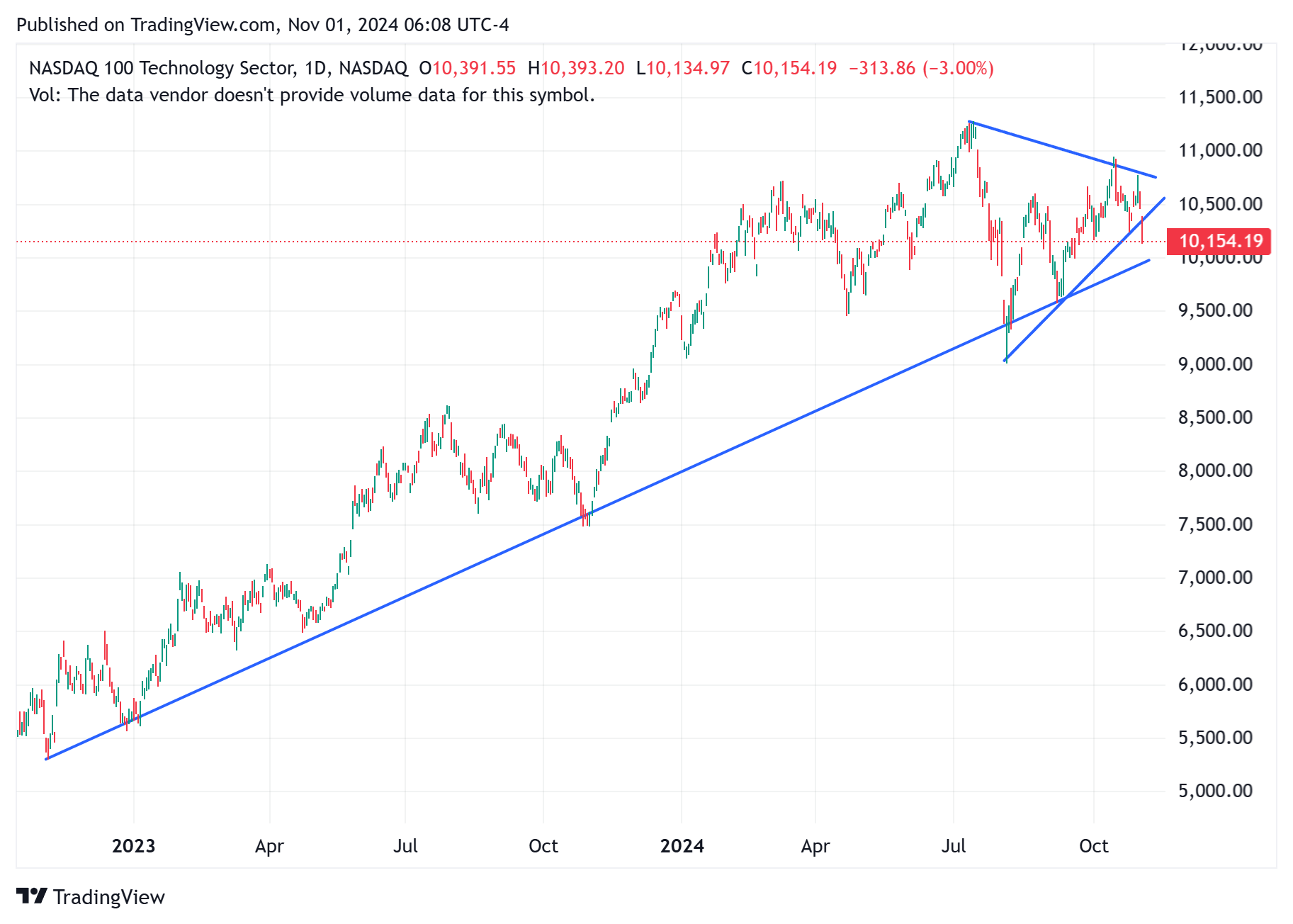
The worst-performing subset of the index is the technology sector. It failed to reach close to the AThs.
It has violated the short-term upward trend. However, a weekly close below the trend line would be needed to confirm the change in trend.