


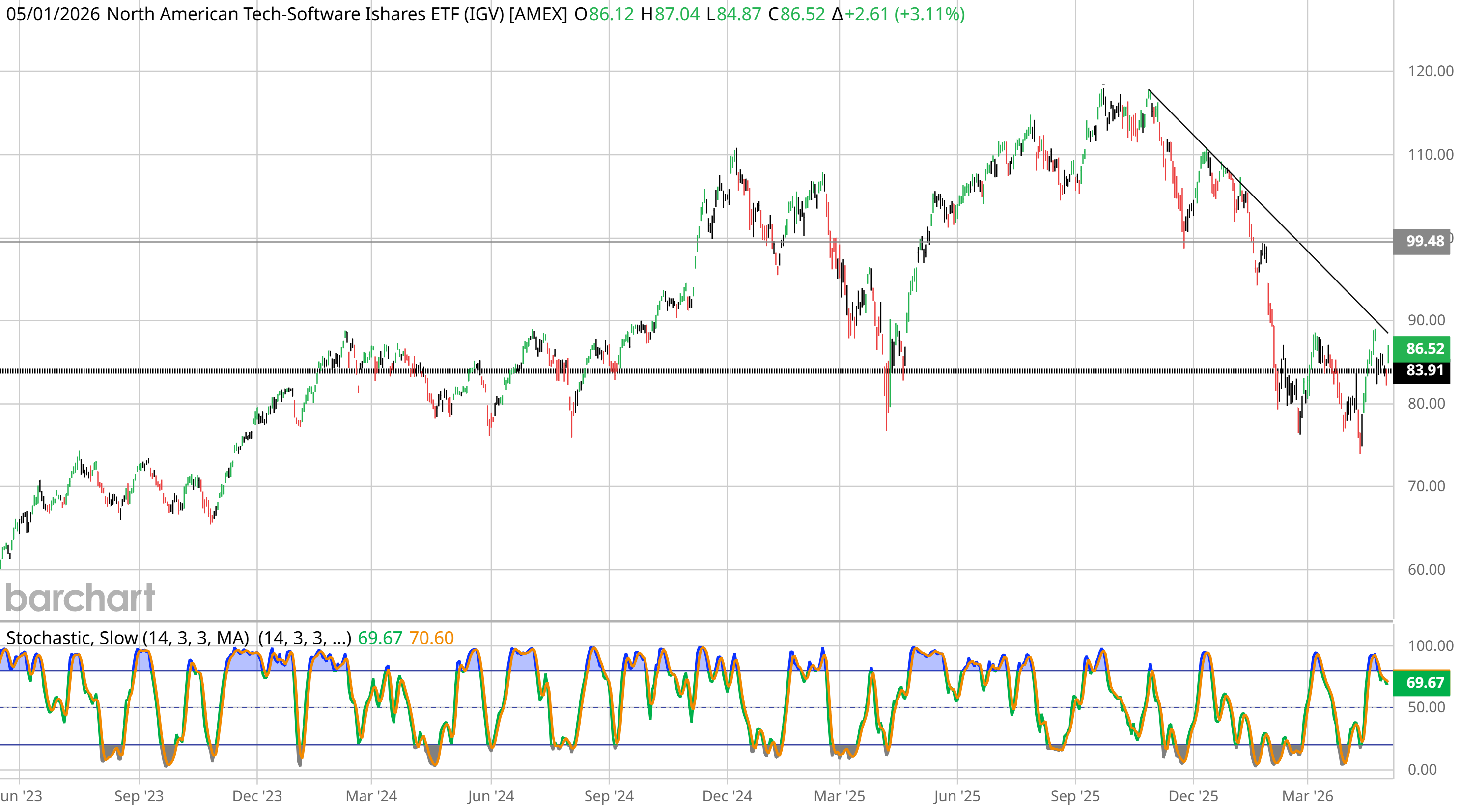
A week ago, we wrote that the software armageddon thesis was already losing edge. Ten days of earnings later, with all four hyperscalers reported, with Microsoft delivering the most consequential pricing-model statement of the cycle, and with the iShares Tech-Software ETF (IGV) breaking back through the 83.91 line that had marked the floor since the April panic — the picture has clarified.
The thesis isn’t gone. It is being repriced into something narrower, slower, and survivable. Software did not need to crash to exit the armageddon regime. It just needed to stop falling while the largest player in the space told the market exactly what the new model looks like.
What changed in ten days
The hyperscaler print was decisive. Microsoft Cloud crossed $54 billion in the quarter, up 29% year over year. Microsoft’s AI business surpassed a $37 billion annualized run rate, up 123%. Azure grew 40%. Alphabet and Amazon delivered AI-driven cloud growth that beat skeptical positioning. Meta took its 2026 capex guide up to $125–145 billion, from $115–135 billion previously — a raise on a guide that was already aggressive. Capex commitment from the AI-infrastructure customer base is not slowing. It is accelerating into 2027.
That matters for software because the armageddon thesis was never primarily about the hyperscalers. It was about the layer above them: ServiceNow, IBM, Salesforce, Adobe, MongoDB — the per-seat application businesses that the market began pricing for structural compression on April 9 when ServiceNow dropped 18% in a session and dragged the cohort with it. The thesis was that AI-driven automation eliminates seat counts, that agents replace users, and that the per-seat license becomes obsolete faster than the renewal cycle can absorb. It was a clean narrative. It was priced aggressively into the multiples of every name in IGV.
What the last ten days did was not invalidate the thesis. It refined it. The hyperscaler results show that AI capex is real and growing, indicating that downstream agentic infrastructure has a customer base willing to pay. The question is no longer whether per-seat is under pressure. It clearly is. The question is what replaces it, and whether the incumbents make the transition or get displaced.
Microsoft answered that question on Wednesday’s call.
The Microsoft pivot — the clearest pricing statement of the cycle
“The basic transformation of any per-user business of ours — whether it is productivity, coding, or security — will become a per-user and usage business. That is the best way to think about it.”
— Satya Nadella, Microsoft FY26 Q3 earnings call, April 29, 2026
Amy Hood went further on the same call, framing the new model as “a licensed business plus a consumption business applied far more broadly than I think people have thought about.” Nadella later: “the seat-based pricing is just entitlement to some consumption. Some base usage rights get bundled in or packaged into seats.”
Read that carefully. Microsoft — the company with the largest installed base of per-seat subscriptions on the planet, the company with the most to lose from messing with the model that built modern enterprise software — just told the market that the seat is becoming a wrapper. Not disappearing. Repurposed. The product is the work that gets done. The seat becomes a packaging mechanism for prepaid consumption, with overage priced per token, per agent action, per outcome.
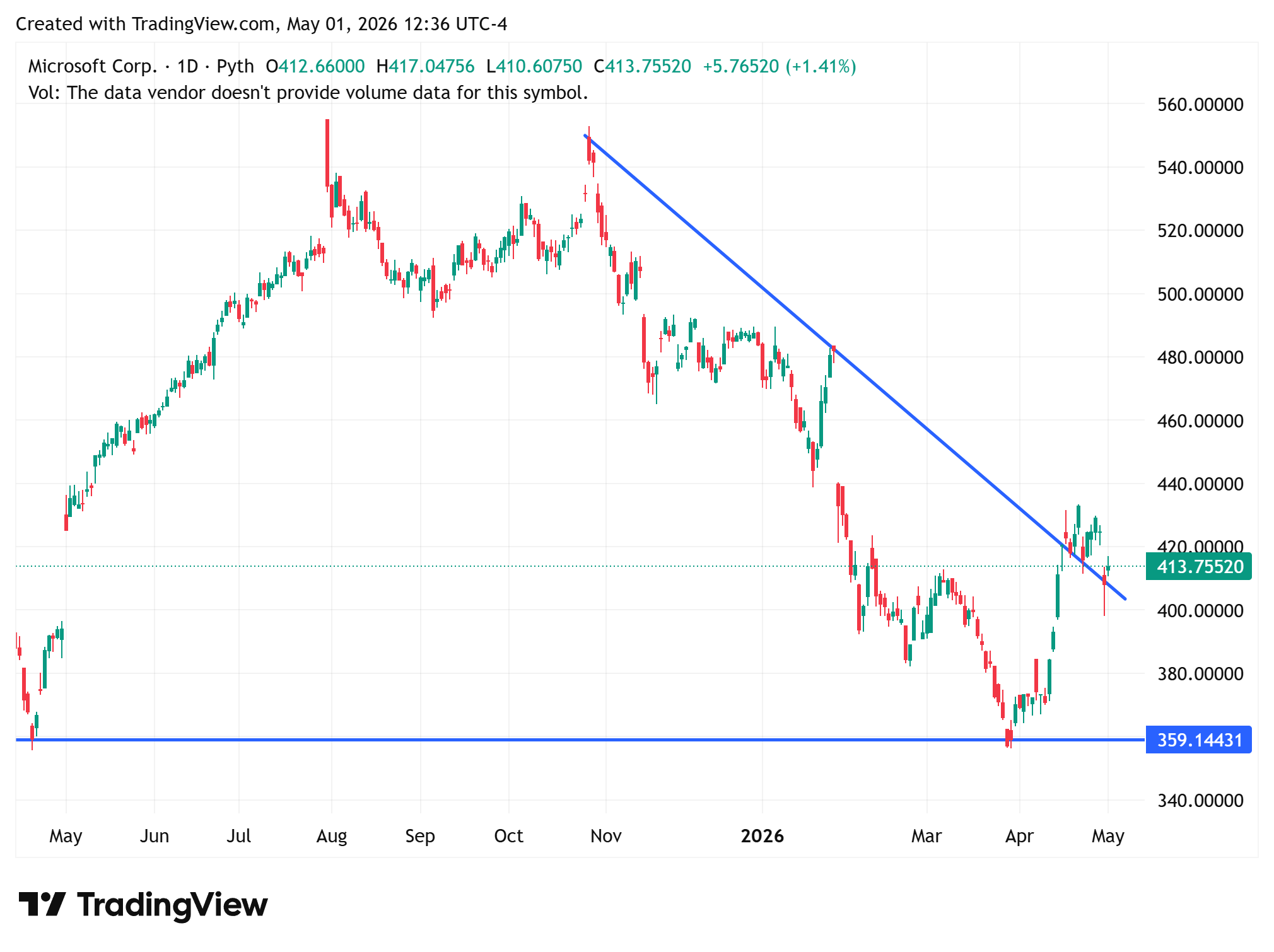
Microsoft started to act.
The operational evidence is not theoretical. Microsoft moved GitHub Copilot to a usage-based model effective June 1. Roughly 60% of Dynamics 365 customer service customers are already buying usage-based credits. The Copilot credit-consumption offer was up nearly 2× quarter-over-quarter. Hood explicitly called out that D365 bookings growth was impacted by weaker renewals “as customers balance spend between the traditional per-seat and the emerging seats-plus-consumption model” — meaning the transition is already showing up as a drag on a legacy bookings metric. Customers are pausing their old seat renewals because they are figuring out the new pricing.
This is not a forecast. It is a status update. The model is already shifting, and Microsoft is telling the market the language to use.
Why Microsoft's going first matters for the cohort
For four months, the most-punished names in software have been per-seat application businesses with no clear AI consumption story. ServiceNow and IBM led the April 9 sell-off. Adobe and Salesforce caught the contagion. The cohort argument was: if these names cannot articulate how they monetize agentic workflows, the multiple compression is structural.
Microsoft’s statement reframes that argument. The per-seat-plus-consumption hybrid is now the publicly stated direction of the largest software company on earth. Every other software CFO now has air cover to tell their own analyst-day audience the same thing. The market will tolerate the transition pain because the largest player is wearing the same lumps. ARR becomes a messier metric. NRR becomes more volatile. Bookings get lumpier. Investors will need to learn a new vocabulary, and they will, because Microsoft is going to teach it to them quarter by quarter.
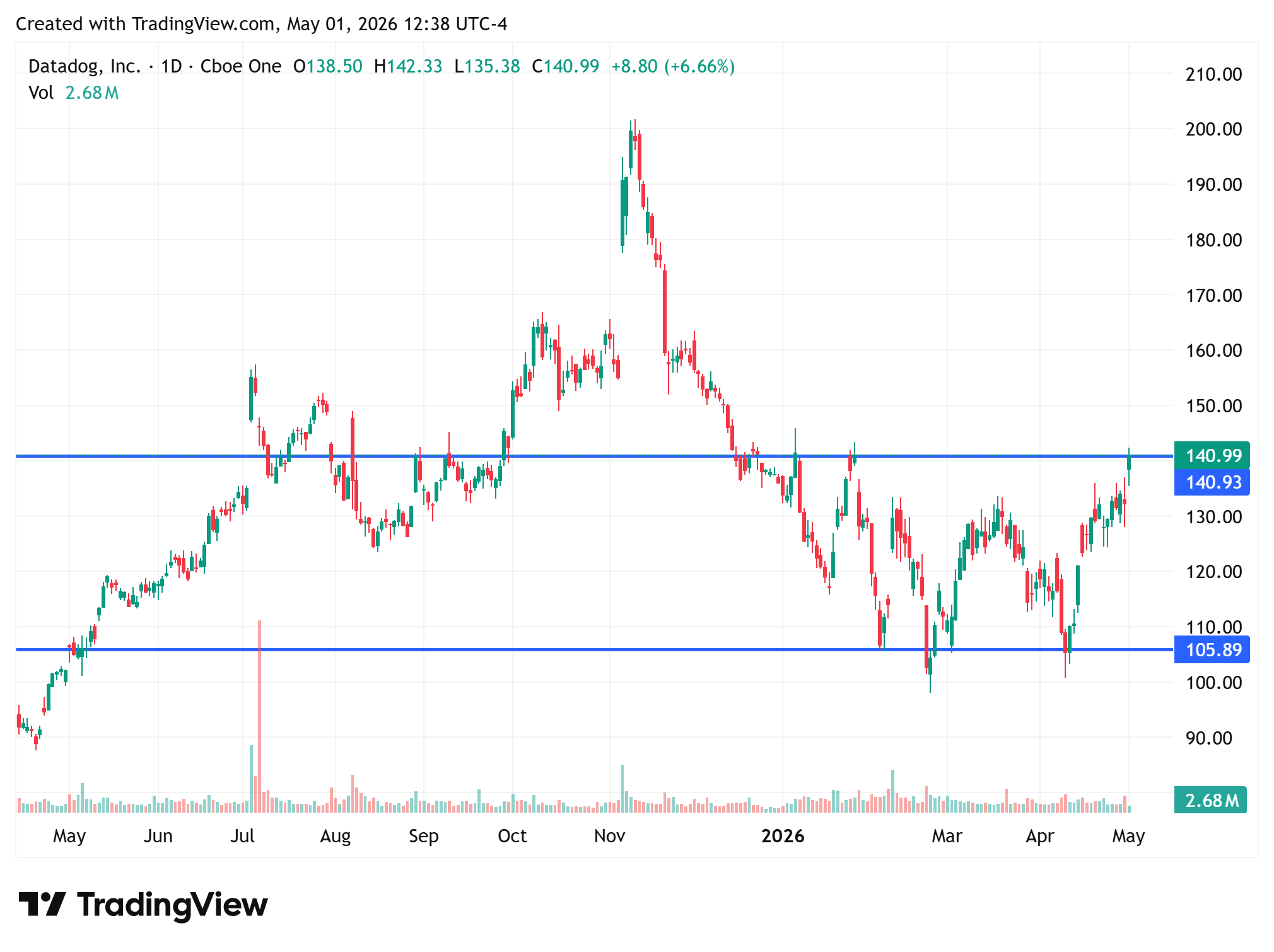
The names that benefit most are the ones that already have a consumption story embedded in the architecture. Cloudflare’s Workers and R2 are usage-priced from day one. Datadog has been a consumption business since IPO — log volume, host count, custom metrics, all metered. Oracle’s OCI usage layer meters consumption beneath the database license. Zscaler has consumption-based components in its SASE platform. The per-seat compression narrative has not broken these names because they were never in it.
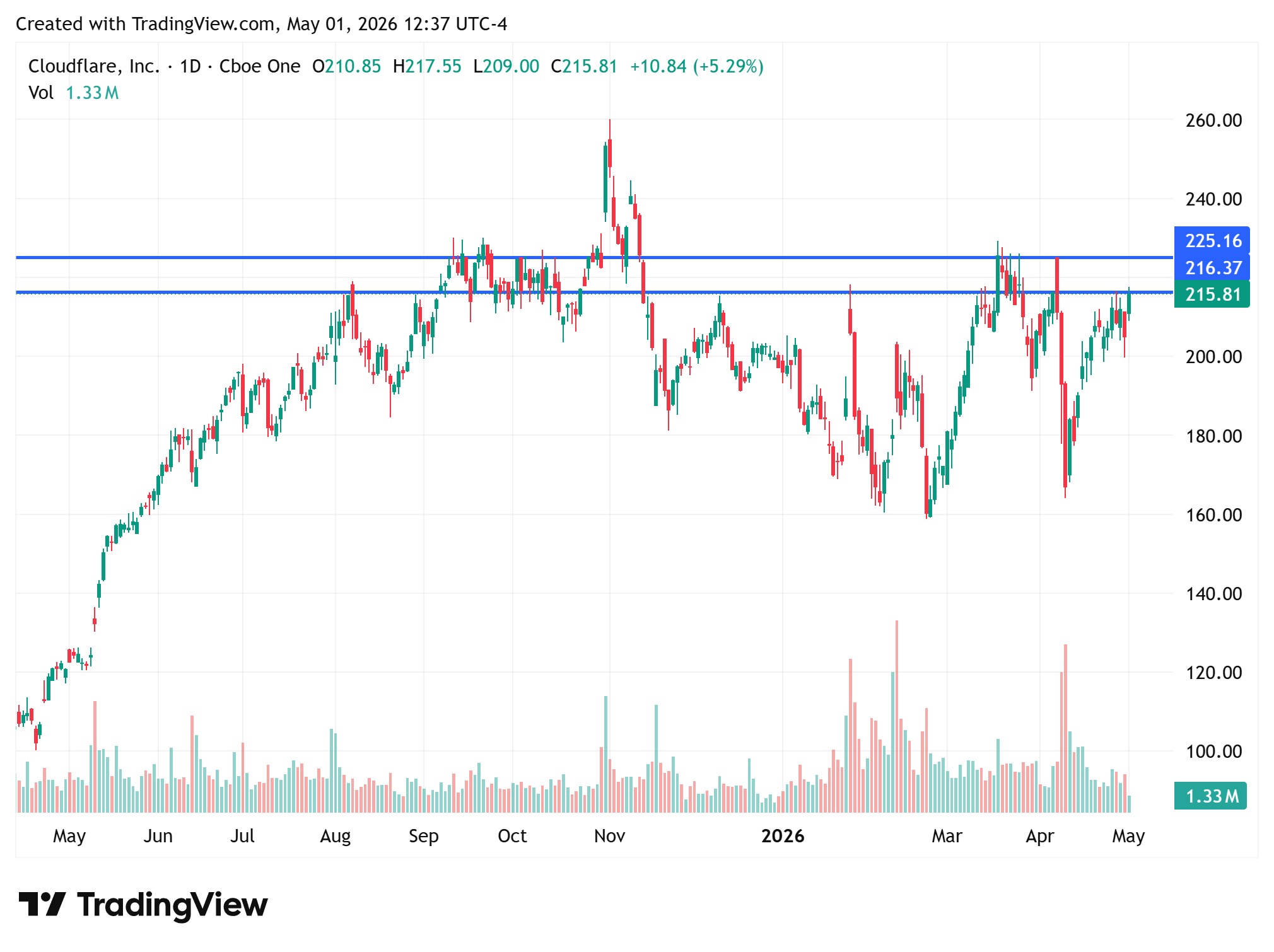
That is what is happening on the tape today. Datadog is opening strong despite not yet having reported (their Q1 print is May 7). Cloudflare is up sharply going into their May 7 print. Oracle is participating in the rotation. Zscaler is bid. The market is starting to differentiate within the IGV cohort — the consumption-native names are getting bid as the seat-based names work through repricing.
This is the rotation we flagged a week ago and have higher conviction on now. Within IGV, the spread between consumption-native and seat-native is the trade. Long the former, underweight the latter, until the seat-native names successfully articulate their own per-user-and-usage story on their next earnings cycle.
The IGV technical setup confirms the regime read.
The chart on IGV is doing what the fundamentals are saying. The downtrend line drawn from the September 2025 high cleanly defined the post-April descent. IGV broke the 83.91 horizontal — a level that goes back to the early 2024 base and has acted as both resistance and support across multiple regimes — to the downside in mid-April. It traded down to roughly 76 at the worst of the panic. It has spent the last two weeks retesting the 83.91 line from below, and today’s tape is the cleanest reclaim we have seen in this cycle.
A successful reclaim of 83.91, sustained on a closing basis with declining volatility, is the technical signal that the armageddon regime is exiting. It is not an all-clear for the cohort. The structural overhead from 99.48 down to current levels is real and will take quarters to work through. But the binary stop-out for the bear thesis was exactly what the chart just rejected. The longer-term downtrend line drawn from the September 2025 highs is being tested simultaneously, and the convergence of the horizontal support reclaim and the downtrend line tests is what we would call a regime-decision zone. The next two to three weeks of price action against 83.91 and the downtrend line will tell us whether we are in the early stages of a new uptrend or simply in a relief rally within a continuing structural compression.
The stochastic on the daily timeframe is at 69.67 and rising — well clear of oversold but not yet stretched. Room to extend exists.
Where the rotation goes next
A first wave of agentic winners is starting to assemble itself. The names showing relative strength today share three characteristics: consumption-native pricing architecture, security or infrastructure adjacency rather than pure application-layer exposure, and credible AI-revenue narratives that are already in the numbers, not in the deck.
The tilt toward security and cybersecurity inside the rotation is notable. The April 23 Cyber-vs-SaaS divergence we wrote about then — Cyber names holding while ServiceNow dropped 18% — was not a one-day artifact. It is the early structural read of where the agentic transition leaves enterprise IT budgets. Cyber-budgets are non-discretionary in AI-capex phases. Application SaaS budgets are exactly the budgets that get reallocated. The rotation we are watching today extends the same logic.
Semis are still rising and probably continue to. But within tech, the spread between AI-infrastructure (semis, hyperscalers, cyber-infrastructure, consumption-native software) and AI-disrupted (per-seat application SaaS without a clear consumption pivot) is widening into a tradable structural gap. Today’s tape is one tick on a longer-running clock.
The bottom line
The software armageddon does not end with a bottom-tick capitulation print. It ends with the largest player reframing the model and the market accepting that the revised model is investable. That is what happened this week. Microsoft’s per-user-and-usage statement is the regime-defining language of the cycle, in the same way that “AI factories” was the language of late 2023. Every software CEO will be quoting variations of it in the next quarterly cycle, and every analyst question will be filtered through it.
We have a higher-conviction read today than seven days ago that the worst of the armageddon repricing is behind us, that the consumption-native names are leading the rotation out, and that a first wave of agentic winners — concentrated in cybersecurity, infrastructure, and consumption-architected software — is starting to form. We are watching the IGV 83.91 reclaim closely as the technical confirmation. We are watching the next round of earnings — Datadog and Cloudflare on May 7 are the immediate tells — for the fundamental confirmation.
The armageddon was real. The regime was painful. The opportunity now is to identify which names emerge from it priced for the new model, rather than the old one.