


Salve, cari subscripti!
Thank you for reading this week's edition of Closelook@Hypergrowth, dated October 23, 2024 👋. The next edition will be published on 30 October 2024.
A Closelook At This Edition
This Week's Action: Nasdaq 100 And Its Subsectors Look More Toppy
Valuation: The Buffett Indicator Screams A Very Loud Sell Signal
Did You Know? Goldman Sachs Just Predicted A Miserable Decade For US Stocks Ahead
The Hypergrowth Portfolio: Anticipating a Year-End Rally, But Less Than Usual
This Week's Stock Spotlight: Sprouts Farmers Market
Knowledge Corner: What Is A Minsky Moment?
Upcoming Transactions: Waiting For A Dip
Final Words: What Can Possibly Go Wrong? A lot!
This Week's Action: Nasdaq 100 And Its Subsectors Look More Toppy
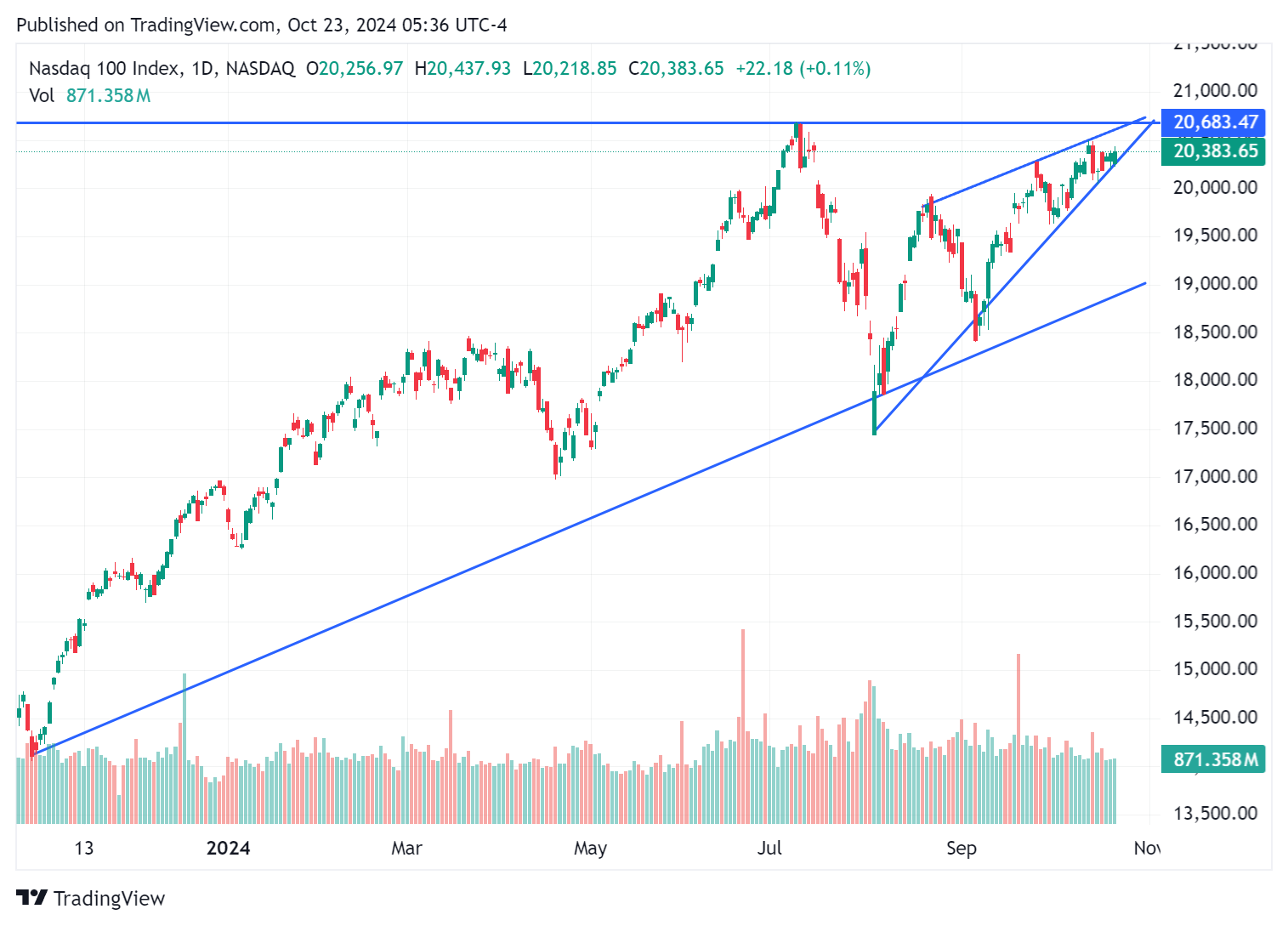
The Nasdaq 100 may still be in the process of forming a double top. It has closed all three gaps from the July high to the August low and has moved sideways since.
The price action looks increasingly “wedgy” to me, which is always alarming. A wedge is a topping formation with potentially more long-term trend-reversing implications.
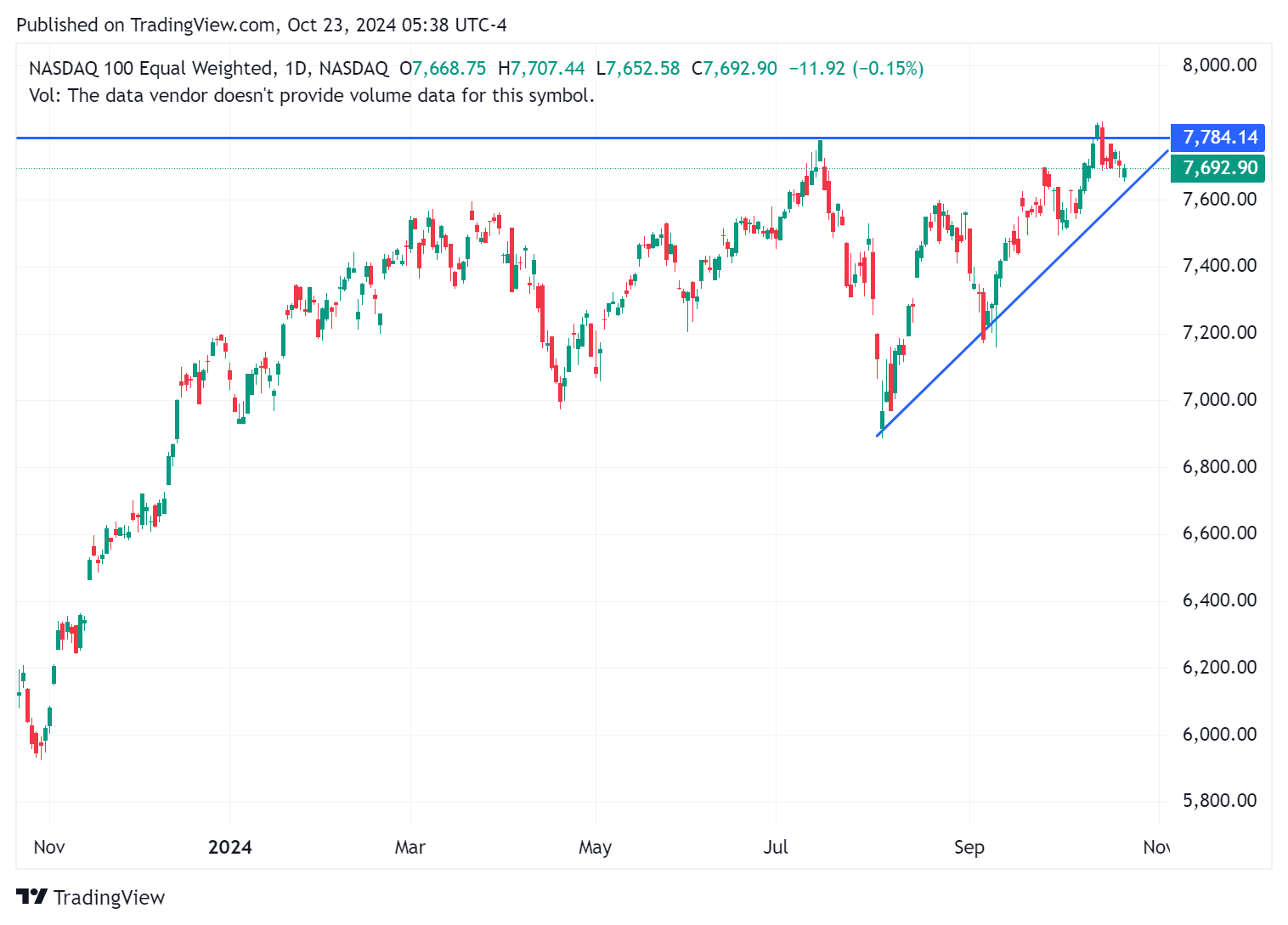
The Nasdaq 100 Equal Weight Index has failed to push through and confirm the ATHs.
Given that we have entered the final week of mutual fund tax selling, are in the middle of the earnings season, and only a few days away from the US elections, elevated volatility can be expected into November. The key message from last week still holds.
The wedge-type move-up we have seen since mid-September may also indicate a short-term top. I expect election uncertainty and tax selling by mutual funds (until October 28) to put pressure on the stock market in the two weeks ahead.
The same applies to the other key messages from last week’s edition:
Geopolitical tensions may also rise as the winter war period approaches in Ukraine, and the Israeli counterstrike against Iran is due shortly. Any slight earnings or guidance misses will lead to wild downturns in hypergrowth stocks, as the ASML example from last week shows.
I would also like to repeat this statement from last week: Contrary to its regular seasonal pattern, the US stock market has increased in the past six weeks. I believe a more significant dip is overdue for a year-end rally to start in November.
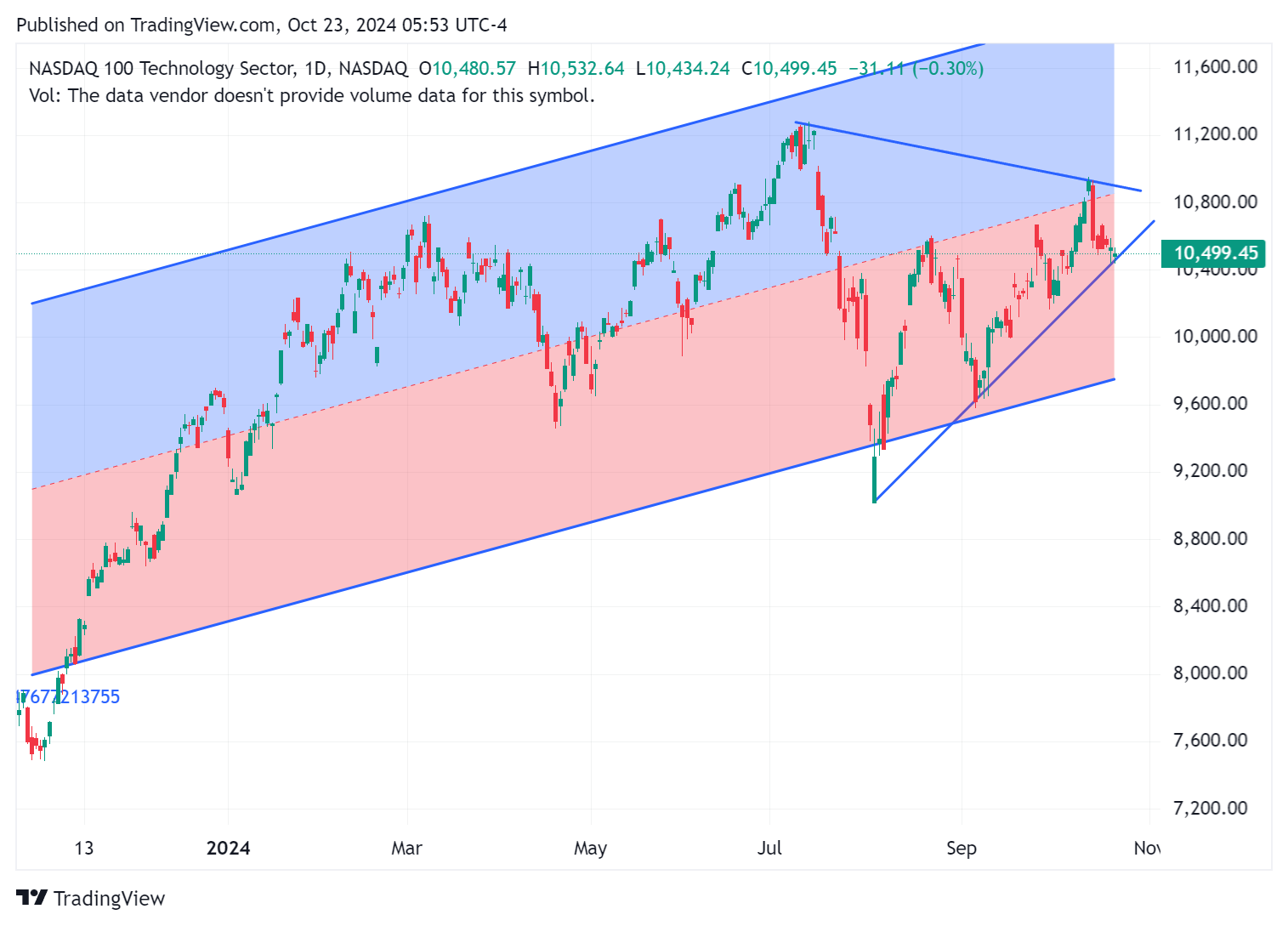
The Nasdaq 100 Technology Index has failed to move close to its old highs.
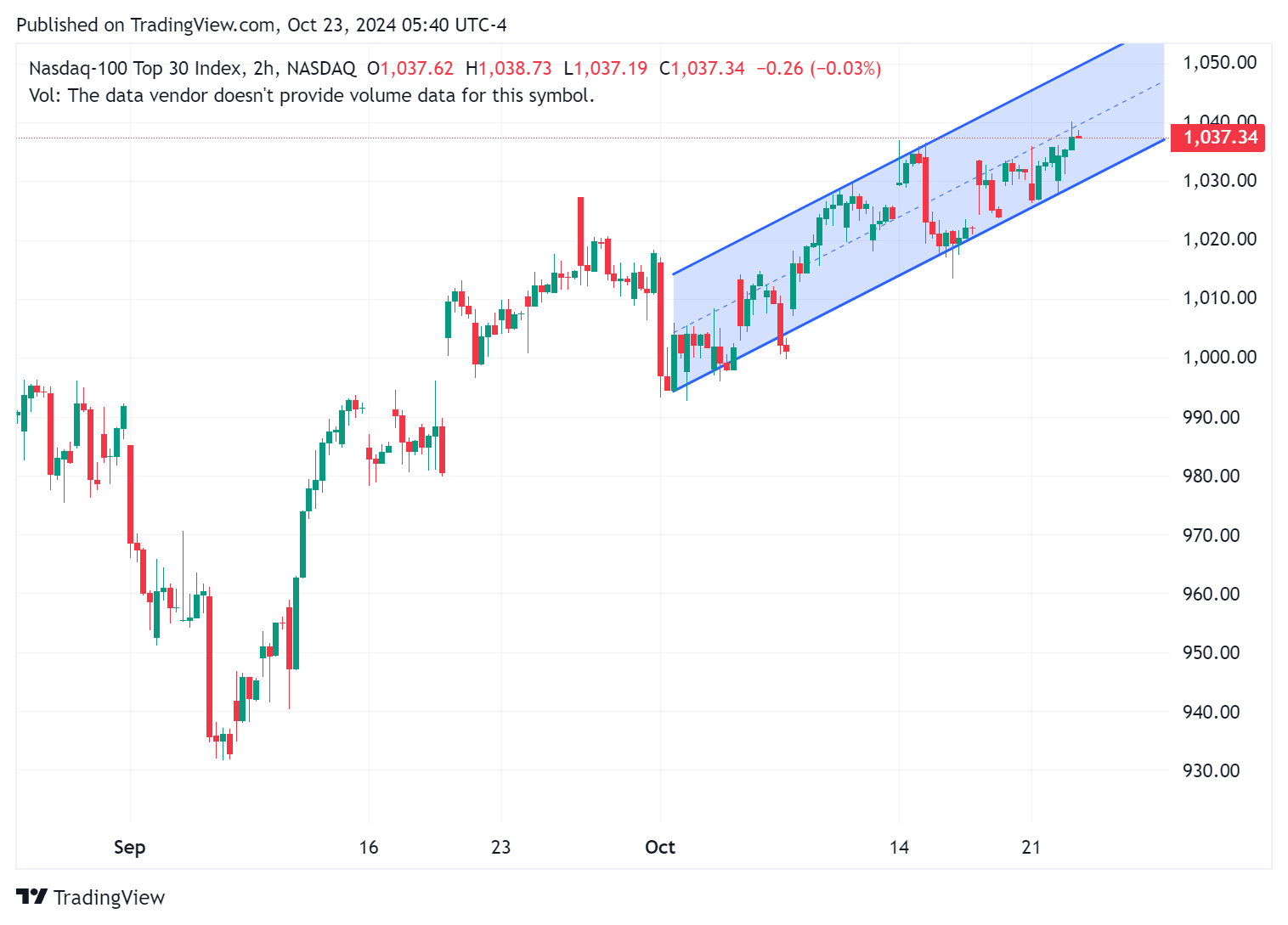
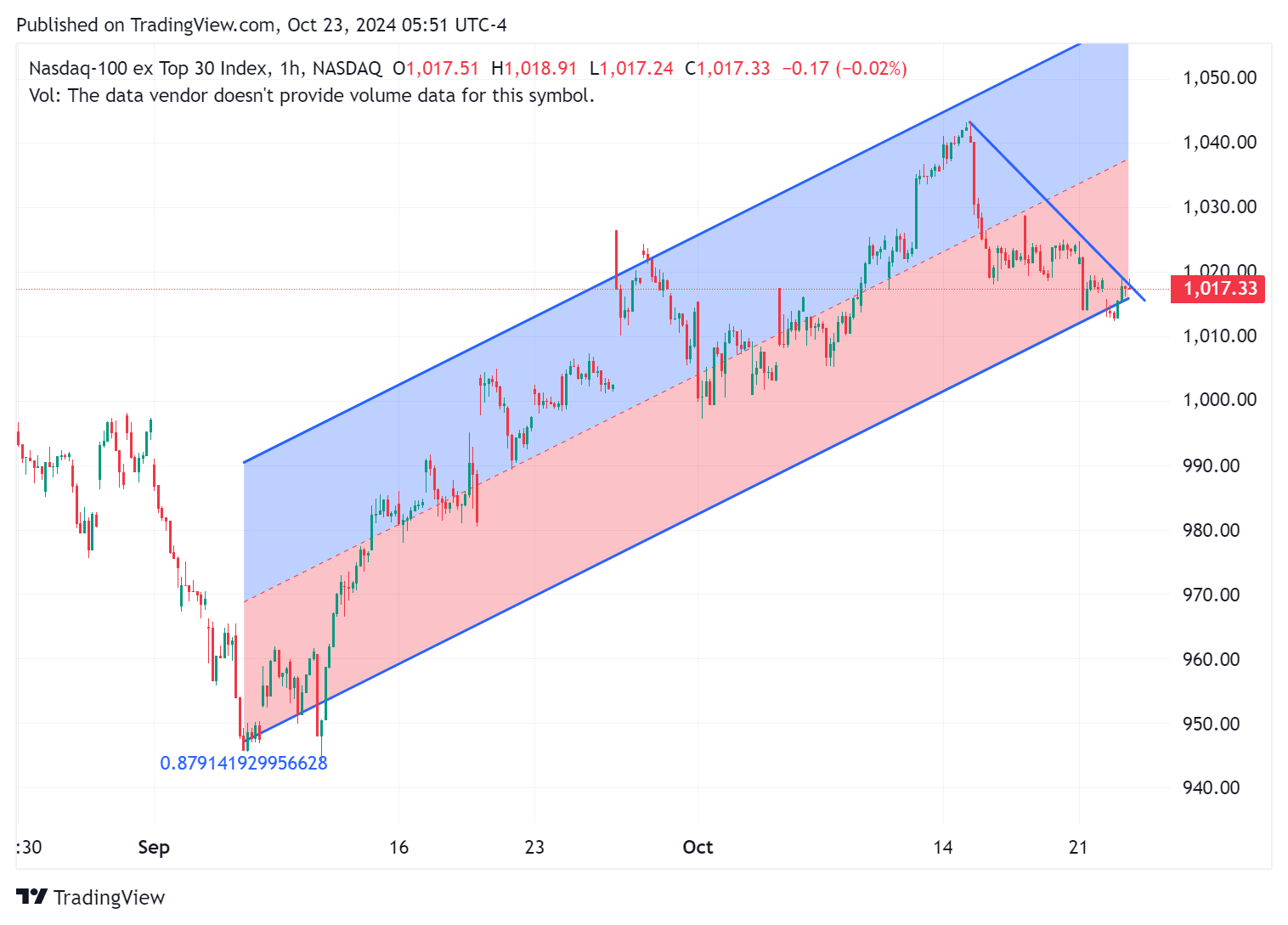
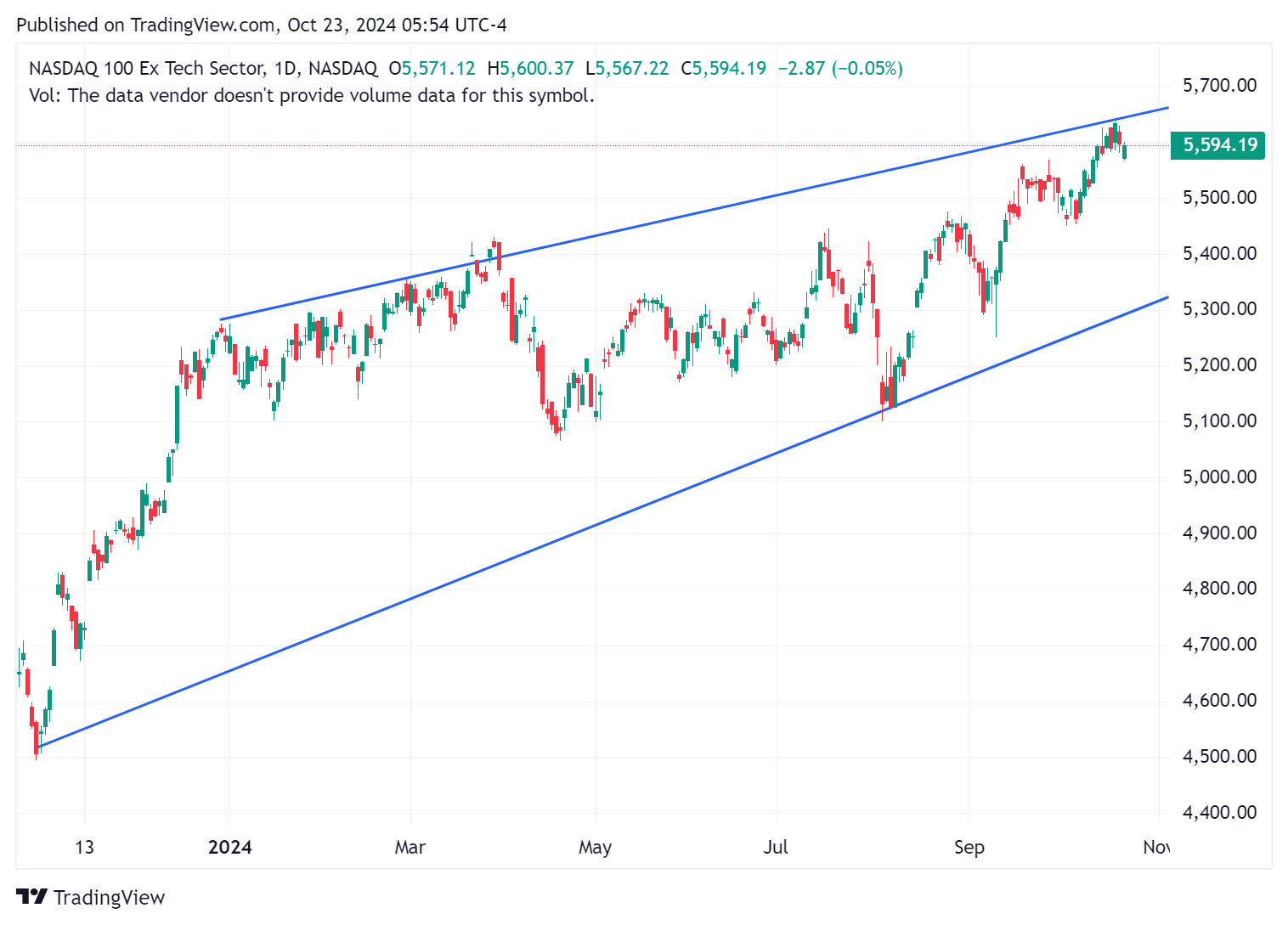
The Nasdaq 100 Ex Tech Index reached a new ATH but has displayed significant weakness this week. The Nasdaq 100 Ex Top 30 Index has also lost steam.
The broadening theme inside the Nasdaq 100 has ended, and I have started to favor the Mag-7 stocks over the smaller ones for the rest of the year.
Higher yields usually do not bode well for the smaller Nasdaq 100 stocks. And the yield on the 10-year Treasury has moved above the crucial 4.2 % level. And I expect it to stay above 4 % until the end of 2024.
Valuation: The Buffett Indicator Screams A Very Loud Sell Signal
The US stock market has just hit its most overvalued level since the peak of the Dot Com Bubble. The SP 500 Forward price-to-sales ratio has exceeded its post-Covid peak and has reached its 2000/2001 level.
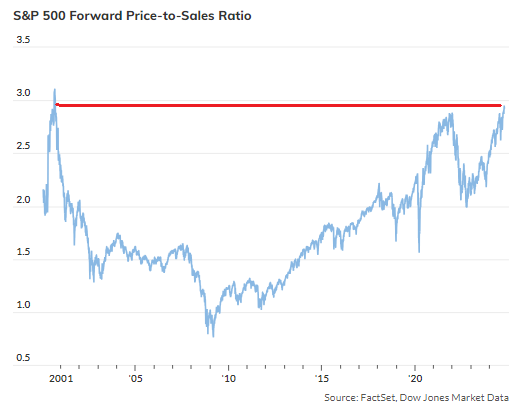
With the Buffett Ratio (i.e., forward P/S) reaching a record high of 2.9 and the S&P 500 forward P/E elevated at 22.0 times, valuations are stretched to the extreme compared to historical standards.
The forward P/E ratio, on the other hand, is relatively low compared to the forward P/S ratio because the S&P 500 forward profit margin has been climbing to record highs and is expected to continue increasing in a soft landing scenario.
Did You Know? Goldman Sachs Just Predicted A Miserable Decade For US Stocks Ahead
Goldman Sachs just forecasted that the S&P 500 would yield annualized returns of just 3% (before adjusting for inflation) over the next decade.
They estimate that the potential outcomes range from -1% at the low end to +7% nominal returns at the high end. This is a significant decrease from the 13% average annual return observed over the past ten years. This forecast is also notably lower than the long-term average return of 11% and the broader market expectation of around 6%.
Several factors contributed to this subdued outlook. One reason is the current high level of market concentration, with the ten largest mega-cap technology firms, such as Apple, Microsoft, and Amazon, accounting for about 36% of the index. This concentration makes the index's performance heavily reliant on these companies' earnings growth.
Additionally, Goldman Sachs anticipates a slight contraction in GDP over the next decade, further impacting potential returns. This refers to a reduction in economic growth or output from current levels rather than an outright decline into negative territory.
This slowdown could manifest as lower GDP growth rates, reduced consumer spending, or less business investment, but not necessarily a full recession where economic activity declines for consecutive quarters.
Goldman Sachs also highlighted a 72% chance that the S&P 500 would underperform compared to Treasury Bonds over this period, with a 33% likelihood that stock returns will fall below inflation levels.
The analysts suggest that investors should prepare for lower equity returns relative to historical performance and consider diversification strategies, such as equal-weighted index exposure, to achieve better returns potentially.
Paul Tudor Jones and the Minsky Moment
Billionaire hedge fund manager Paul Tudor Jones has expressed concerns about the U.S. government's current fiscal deficit and the increased spending promised by both presidential candidates, warning that the bond market may compel the government to address these issues post-election.
"We will quickly face financial difficulties unless we seriously tackle our spending problems," Jones stated in an interview with CNBC's Andrew Ross Sorkin on 22 October 2024.
As the founder and chief investment officer of Tudor Investment, Jones is worried that excessive government spending could trigger a significant bond market sell-off, leading to rising interest rates.
In contrast to Goldman Sachs, he plans to avoid owning fixed income and intends to bet against the longer-dated segment of the bond market, focusing on holding Bitcoin and gold.
Jones questioned whether a "Minsky moment"—a sudden dramatic drop in asset prices—could occur in the U.S. debt markets after the election, suggesting a potential realization that proposed fiscal policies are unsustainable.
The federal deficit for fiscal year 2024 has surpassed $1.8 trillion, an 8% increase from 2023, according to the Treasury Department. The government addresses this deficit by selling Treasury bonds, and Wall Street traders closely monitor the timing and profile of these sales. Over the past three years, rising interest rates have also raised concerns among economists and traders due to the government's increased annual debt cost.
In his interview, Jones noted that budget deficits grew under former President Donald Trump and President Joe Biden's administrations, and he criticized Trump and Vice President Kamala Harris as being "least suited for the job ahead" regarding budget management. He remains concerned about inflation, especially if Trump wins.
Jones suggested several ways for the government to align its spending better, which might require significant changes like allowing Trump's first-term tax cuts to expire or significantly reducing the federal workforce.
Jones founded his hedge fund four decades ago and gained prominence by accurately predicting the 1987 stock market crash.
Tudor Jones is part of a growing crowd of elderly billionaires that has become skeptical - towards life, the stock market, the US and to mostly anything. :-))))
